The Ultimate “Burnt” Basque Cheesecake: Effortlessly Creamy, Crustless, & Gluten-Free
Prepare to revolutionize your cheesecake experience! This renowned Basque Cheesecake, hailing from the vibrant culinary scene of Spain, defies conventional baking wisdom. It’s masterfully baked at high heat until its exterior achieves a dramatic, deeply caramelized hue, while its core remains unbelievably ultra-creamy and lusciously soft. This striking contrast creates an exceptional flavor profile that is both complex and incredibly satisfying. The best part? This show-stopping dessert is an absolute dream to make – it’s entirely crustless, simplifying the process immensely. You simply mix a handful of ingredients, pour the batter into a pan, and bake it until that rich, coppery-brown surface forms. It’s guaranteed to impress your guests every single time, and as an added bonus, it’s naturally gluten-free!
If you thought you knew cheesecake, prepare to have your preconceptions delightfully shattered. It’s time to embrace the “dark side” of dessert – a side that is both profoundly rich and utterly delicious! Unlike traditional cheesecakes that demand careful, gentle baking and blemish-free surfaces, the ‘Burnt’ Basque Cheesecake revels in its imperfections. This isn’t just a dessert; it’s a culinary statement.
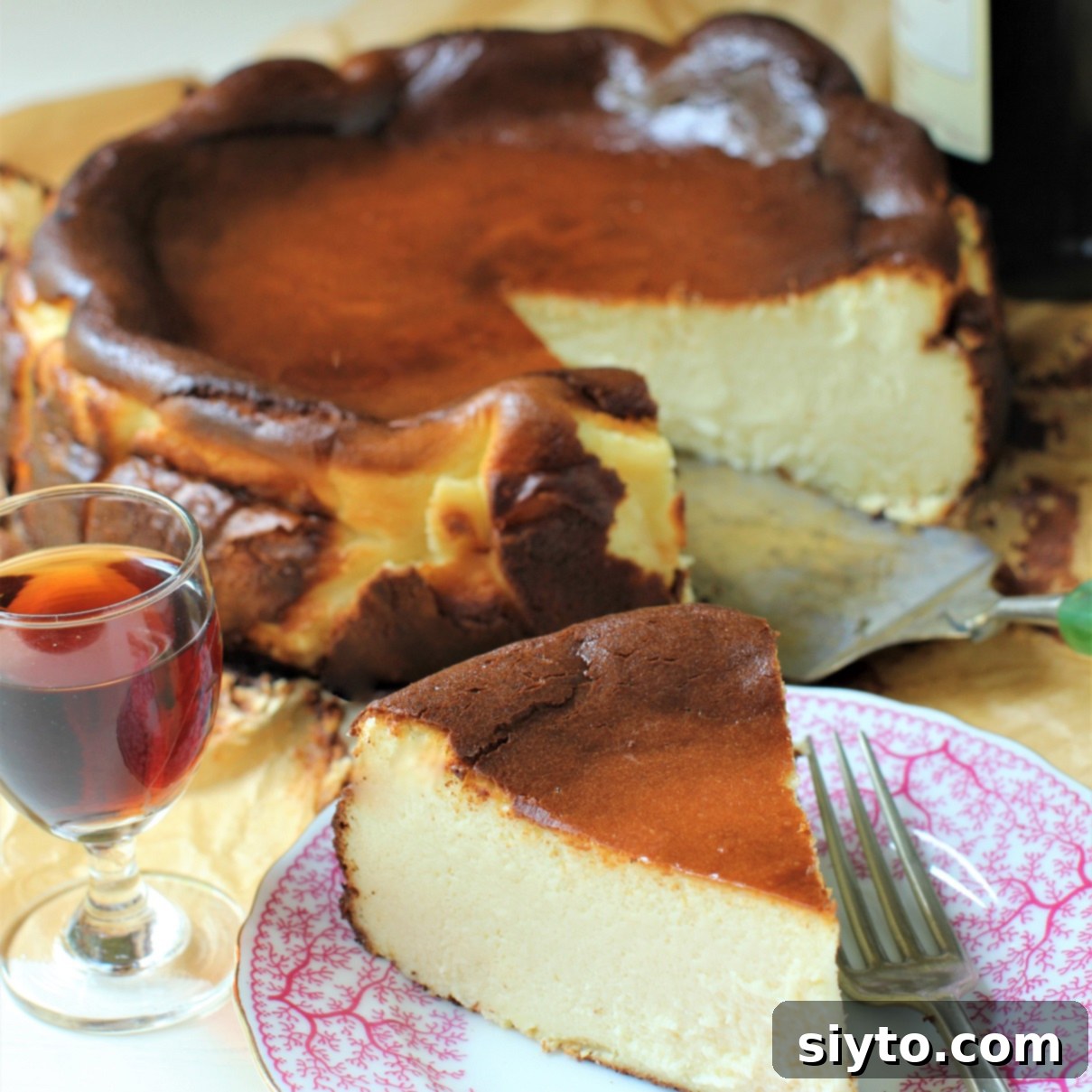
This iconic cheesecake unapologetically breaks all the conventional rules. It’s intentionally baked at a very high temperature, leading to its characteristic deeply browned, almost charred top. Cracks are not only expected but celebrated, adding to its rustic charm. When it emerges from the oven, its center is delightfully underbaked and still very jiggly, a sign of the incredible creaminess to come. As it cools, the middle gracefully sinks, creating a beautiful crater. The sides, lined with parchment paper during baking, form large, inviting folds and cracks, giving it a wonderfully unrefined appearance. Indeed, it looks almost burnt – and that’s precisely the point!
While its appearance might seem “rough” or even “ugly” to the uninitiated, its taste is anything but. This cake doesn’t just taste “all right” – it’s an explosion of flavors that will absolutely knock your socks off. The contrast between the bittersweet caramelized crust and the delicate, tangy, creamy interior is a culinary symphony that captivates with every forkful. It’s a bold, confident dessert that confidently declares its deliciousness from the very first bite.
The Origins of a Culinary Phenomenon: La Viña’s Basque Cheesecake
Welcome to the story of the famous Basque Cheesecake, known locally as Gazta Tarta. This culinary marvel gained international fame in the Basque region of Spain, specifically from the iconic ‘La Viña’ bar in San Sebastian. Here, the legendary chef Santiago Rivera ingeniously crafted a cheesecake that defied all previous conventions, paving the way for what is now widely recognized as Europe’s most famous cheesecake. Imagine walking into ‘La Viña’ and seeing its walls lined with shelves, overflowing with rows upon rows of these freshly baked, glorious cakes. They are served continuously to eager customers throughout the day, often leaving the shelves completely empty by closing time – a testament to its irresistible appeal.
In the last decade, the simple yet extraordinary Basque Cheesecake has propelled San Sebastian, already renowned as one of the world’s culinary epicenters, to even greater heights of gastronomic fame. And for very good reason. The sheer unapologetic “take-me-as-I-am” presence of this cake is enough to spark curiosity and immediately whet any appetite. Its rich, comforting flavors of burnt sugar beautifully intertwine with the tangy, creamy cheesecake, captivating tastebuds and winning hearts across the globe. That seemingly “ugly” or rustic exterior quickly becomes an alluring promise, completely overturning all preconceptions the moment you bite into the unctuous, almost-custardy, perfectly set center. It’s a journey of discovery that begins with a look and culminates in an unforgettable taste.
The Magic of Caramelization: A Flavor Symphony
There’s a remarkable magic that unfolds on the path to this “almost-burnt” perfection. Despite being less sweet than many other cheesecakes, the sugars within the cake undergo a profound Maillard reaction during its intense blast of high heat. This chemical transformation is responsible for creating those coveted deep, rich, and decadently caramelized flavors. The goal is to push the cake right to the very edge of being burnt, creating a magnificent bitter-sweetness, but to skillfully stop just before it goes “over the cliff.” The top and sides develop this deeply dark, complex flavor, while the inside of the cheesecake barely sets, retaining a lusciously soft, silky, and almost liquid consistency. This provides that familiar, delightful cheesecake tang, perfectly balanced by the smoky caramel notes from the crust. When these contrasting textures and flavors meet in a single mouthful, they create an extraordinary culinary symphony that is truly unforgettable.
After just one bite, any initial thought of this cake being “ugly” completely dissipates. It transforms, suddenly becoming a thing of undeniable beauty and sophistication. That deep, dark brown top now glows with the allure of burnished copper, inviting you in. The sides, with their beautifully formed ripples and folds from the parchment paper, become undulating waves of deep mahogany and lustrous ivory, each crag and cranny inviting a glorious exploration of flavor and texture. You’ll find yourself reaching for bite after ecstatic bite, drawn in by its unique charm and exquisite taste. This is not just dessert; it’s an experience.
An Unfailingly Delicious Dessert: You Can’t Mess It Up!
Stepping back from the poetic descriptions for a moment, let’s be pragmatic: this cake is truly worth every bit of the hype. It’s an incredibly forgiving recipe, making it almost impossible to mess up, even for novice bakers. This inherent simplicity contributes significantly to its immense popularity. The beauty of the ‘Burnt’ Basque Cheesecake lies in its rustic nature; perfection is not the goal. Those characteristic cracks and the “burnt” appearance are not flaws, but rather the very essence of its charm and flavor. So, whether you’re a seasoned baker or just starting out, you can approach this recipe with confidence, knowing that the outcome will be something truly special.
My only regret is that I wasn’t aware of the famous Burnt Basque Cheesecake when we visited the Basque region during our memorable trip to Spain and France. Oh, to have tasted it in its legendary birthplace! However, I am absolutely thrilled to have discovered it now. Since adding it to my baking repertoire, it has become an instant crowd-pleaser, delivering consistent “wow” reactions every single time I’ve served it. Its unique appeal and undeniable deliciousness make it a dessert that leaves a lasting impression on everyone who tries it.
‘Burnt’ Basque Cheesecake – The Easiest Cheesecake Ever
If its intriguing story and delicious reputation haven’t convinced you yet, perhaps its unparalleled ease of preparation will. The Basque cheesecake is genuinely one of the easiest cheesecakes you will ever make. Forget the tedious, delicate process of creating and pre-baking a crust; this recipe requires absolutely none. Instead, as the outside of the cheesecake caramelizes to perfection during its high-heat bake, it naturally forms a sturdy, delicious, and deeply flavored “crust” that perfectly cradles the soft, creamy center. The process is straightforward: simply beat together a few basic ingredients until smooth, then pour the velvety batter into a springform pan that you’ve casually lined with a large sheet of parchment paper. The paper is intentionally rumpled and rustic, adding to the cake’s unique charm.
Once baked, you simply cool it, then chill it, and that’s it! The minimal fuss involved makes this recipe a true winner for any occasion. Another significant advantage of this crustless marvel is its versatility for those with dietary restrictions. It contains only a small amount of flour, which means it’s incredibly simple to substitute with a gluten-free flour blend, making it entirely gluten-free without compromising on texture or taste. In fact, you can even omit the flour altogether, and the cheesecake will still set beautifully once chilled, albeit with an even softer, more custard-like consistency. This dessert truly combines a powerful “wow factor” with an incredible “comfort factor,” making it a perfect choice for both elegant gatherings and cozy evenings alike.
To elevate this heavenly cake even further, consider serving it with a small glass of good Spanish sherry. The nutty, slightly sweet notes of the sherry beautifully complement the bittersweet caramel and creamy tang of the cheesecake, creating an exquisite pairing that truly celebrates its Spanish heritage. It’s sheer delicious simplicity at its finest, offering a refined yet comforting dessert experience.
Buen provecho! (Enjoy your meal!)
* * * * *
Authentic “Burnt” Basque Cheesecake
Margaret Bose Johnson
Save to Pinterest
Equipment
- 8-inch (20cm) springform pan (you can use a 9-inch (23cm) springform pan, but the cake will be flatter)
- parchment paper
Ingredients
- 3 bricks (250gms/8oz. each) cream cheese, at room temperature (750 grams/1.5lbs total weight)
- 1 cup (200gms) sugar preferably natural evaporated cane sugar
- ½ teaspoon fine sea salt
- 1 teaspoon pure vanilla extract
- 4 large eggs
- 3 tablespoons sweet rice flour or gluten-free flour blend or all-purpose flour for non-gluten-free
- 1½ cups (360ml) heavy cream (whipping cream/double cream, 33-40% milk fat)
Instructions
- Preheat your oven to a blazing 400°F (200°C). This high heat is crucial for achieving that signature “burnt” exterior.
- Lightly grease an 8-inch (20cm) springform pan. Alternatively, a 9-inch (23cm) pan can be used, but note that your finished cake will be slightly flatter. Cut a generous piece of parchment paper, approximately 18 inches (45cm) square, ensuring it’s large enough to line the pan and extend about 2 inches (5cm) above the rim on all sides. Carefully press the parchment paper into the pan, allowing it to naturally crumple and crease – this rustic look is part of the Basque cheesecake’s charm!
Once the paper is seated, trim the sticking-up corners so they are roughly 2 inches higher than the pan edge. Then, fold these extended parchment sections out over the edges of the pan to hold the paper securely in place during the initial preparation (you will pull them back up straight before baking). Don’t worry if the paper looks delightfully messy; it contributes to the unique, artisanal appearance of the baked cake.
- In the bowl of a stand mixer fitted with the paddle attachment, or using a hand mixer, whip the softened cream cheese on medium speed until it becomes wonderfully smooth and free of lumps. This ensures a silky-smooth batter.
- Add the sugar (preferably natural evaporated cane sugar for a richer flavor), fine sea salt, and pure vanilla extract to the cream cheese. Continue to beat vigorously until all the ingredients are thoroughly combined and the mixture is exceptionally smooth and creamy.
- Incorporate the eggs one at a time. After adding each egg, beat well until it is fully integrated into the batter, making sure to scrape down the sides of the bowl with a spatula before adding the next egg. This methodical approach ensures a homogenous mixture.
- Gently sprinkle the flour over the batter, then mix until just combined. Be careful not to overmix at this stage.
- Finally, slowly pour in the heavy cream (whipping cream/double cream, with 33-40% milk fat) in a steady stream while continuing to beat. Mix until the cream is fully incorporated, and you are left with a beautifully smooth, liquid batter.
- Carefully pour the prepared batter into the parchment-lined springform pan. Before placing it in the oven, gently pull up the folded-over edges of parchment paper so they stand straight up around the cake. This helps contain the batter as it rises during baking and contributes to the iconic ruffled edge.
- Bake the cheesecake for an initial 30 minutes at 400°F (200°C). After this time, without opening the oven door, increase the oven temperature to a searing 450°F (230°C). Continue baking for another 20 to 30 minutes. The cake is ready when its top is dramatically puffed and has achieved a deep, dark chocolate brown color – almost burnt – while the center remains delightfully jiggly when you gently shake the pan. This jiggly center is absolutely key, as it will continue to set as the cake cools. (If you opted for a 9-inch pan, start checking for doneness around the 45-minute mark, as it will likely bake about 5 minutes faster.)
- Once baked, transfer the cheesecake (still in its pan) to a wire rack to cool completely at room temperature. After it has cooled, refrigerate the cake, uncovered, in its pan for a minimum of 4 hours, or ideally, overnight (up to 2 days). Chilling is crucial for the cheesecake to fully set and develop its incredible texture.
- When you are ready to serve this masterpiece, carefully remove the springform pan and gently tug away the parchment paper from the sides. The parchment will easily peel off, leaving behind those beautiful, rustic edges. Serve the cake chilled for a firmer texture, or at room temperature to highlight its ultimate creaminess.
Notes
Like many cheesecakes, this “Burnt” Basque Cheesecake freezes exceptionally well. Consider baking an extra one or stashing a few slices away in the freezer. This way, you can easily pull them out and enjoy a delightful treat on a future rainy day, or whenever a craving strikes.
*This recipe has been thoughtfully adapted from ‘Basque Country, A Culinary Journey Through a Food Lover’s Paradise’ by Marti Buckley, bringing the authentic flavors of Spain right to your kitchen.
Want to receive new Kitchen Frau recipes directly to your email? Sign up here and you’ll get a handy and useful kitchen tip along with each recipe, too. (No spam ever.)
If you like my recipes, follow me on Instagram, Pinterest, Twitter, and Facebook. You’d make my day!
PIN IT HERE to save the recipe for later:
You might also like these delightful dessert recipes:
Flourless Yogurt Cake – Light, Fluffy, Almost Like Cheesecake
Moelleux au Chocolat – Decadent, Fudgy, Flourless Chocolate Cake
Bavarian Apple Cake with Cheesecake Base
Homemade Ice Cream Cake