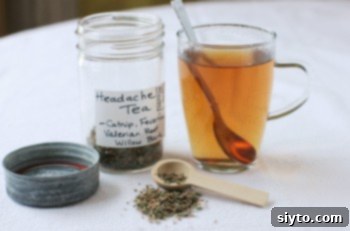
Soothe Your Headaches Naturally: The Ultimate Herbal Tea Recipe for Holistic Relief
Experience profound relief as you sip on a warm mug of this specially crafted Headache Tea, designed to gently melt away throbbing pain and discomfort. (Jump straight to the recipe details below.)
There are few feelings as unwelcome as the onset of a headache. You know the drill: that tell-tale throbbing sensation in your forehead, a painful pressure behind your eyes that makes blinking a chore, and a neck that feels impossibly stiff, as if it’s been twisted in all directions. Often, it’s accompanied by a disorienting sense of fullness in your head, like a medicine ball expanding within your skull, and a subtle, unsettling ripple of nausea that threatens to escalate.
When these familiar signs arrive, it’s a clear signal: the headache has landed. And often, it lands again and again, disrupting daily life and making even simple tasks feel monumental. For many, the immediate reaction is to reach for an over-the-counter pain reliever, but what if there was a gentle, natural alternative? What if you could proactively address that unwelcome visitor before it fully settles in for a long, painful stay?
For years, I’ve relied on a specific blend of dried herbs, brewing a potent concoction that serves as my first line of defense against incoming headaches. The moment I sense those initial symptoms, I quickly boil water and prepare my herbal tea. As I sip the warm, golden liquid, a sense of calm begins to spread, often intercepting the headache before it can evolve into a full-blown migraine. This herbal approach has proven to be remarkably successful, especially when caught early.
Why Choose Natural Headache Relief?
In our modern world, we often turn to pharmaceuticals for quick fixes. However, over-the-counter pain relievers, while effective for some, are not always the safest long-term option. Regular use can come with a host of potential side effects, including stomach upset, liver issues, and even rebound headaches. This growing awareness has led many, myself included, to seek gentler, more holistic methods for managing common ailments like headaches.
Embracing natural remedies, particularly those derived from herbs, offers a way to support the body’s innate healing mechanisms. Herbal teas, in particular, provide a comforting and accessible method for integrating these powerful plants into your routine. This Headache Tea recipe leverages the synergistic properties of four time-honored herbs, each contributing its unique benefits to create a truly soothing and effective blend.
The Power of Herbs for Headache Relief
Each herb in this carefully chosen Headache Tea blend plays a vital role in addressing different facets of headache pain, offering a multi-pronged approach to relief.
Catnip: The Calming Muscle Relaxant
Often associated with feline antics, Catnip (Nepeta cataria) is a revered herb from the mint family with significant benefits for humans. It’s renowned for its mild sedative properties, which help to relax tense muscles, a common contributor to tension headaches and neck stiffness. Its soothing action extends beyond physical relaxation, aiding in overall calm and reducing stress, which can often trigger or exacerbate headaches. Historically, catnip has been used in traditional herbology for centuries to alleviate various discomforts, making it a gentle yet effective component in our natural headache remedy.
Feverfew: A Migraine Prevention Ally
Feverfew (Tanacetum parthenium), with its charming daisy-like flowers, is a member of the sunflower family and has been recognized as a known headache remedy since ancient times. This powerful herb is particularly celebrated for its ability to help in preventing migraines. Its effectiveness is attributed to compounds like parthenolides, which are believed to possess anti-inflammatory properties and help to regulate blood vessel dilation, thereby potentially reducing the frequency and severity of migraine attacks. Regular consumption of feverfew, as part of a preventative routine, can be a game-changer for those prone to severe head pain.
Valerian Root: The Natural Sedative for Pain Relief
Valerian root (Valeriana officinalis) is a well-established traditional medicinal plant, widely used for its profound pain relief properties and as a potent relaxant. Its active compounds, such as valerenic acid, interact with neurotransmitters to promote relaxation and can significantly reduce muscle tension, which is a key factor in many headache types. By calming the nervous system and easing muscle spasms, valerian root helps to alleviate the underlying stress and physical discomfort that often accompany and contribute to headache pain, promoting a sense of tranquil well-being.
White Willow Bark: Nature’s Aspirin without the Side Effects
White Willow Bark (Salix alba) has been lauded for centuries as a formidable headache and pain-relieving remedy. It contains salicin, a compound that the body converts into salicylic acid, which produces effects similar to the active ingredient found in synthetic aspirin. This natural analgesic and anti-inflammatory action helps to significantly reduce pain and inflammation associated with headaches. Crucially, willow bark delivers these benefits without the common stomach upsets often experienced with aspirin, making it a preferred natural alternative for many seeking gentle yet effective pain management.
My Personal Experience with Headache Tea
While this herbal tea blend may not be a universal cure for every individual or every type of headache, its efficacy has been profound in my own life. For me, it genuinely works. Despite the initial bitter overtones that some of these potent herbs naturally possess, I’ve grown to appreciate the taste. I believe my body and mind have learned to associate this unique flavor profile with impending relief, effectively telling my taste buds to “shut up and drink it.” This personal connection to a natural remedy reinforces the power of listening to your body and finding solutions that resonate with your individual needs. The consistency and reliability of this tea have made it an indispensable part of my wellness routine, allowing me to proactively manage headaches rather than reactively chase them with harsher alternatives.
* * * * *
Kitchen Frau Notes: Sourcing high-quality dried herbs is key to the effectiveness of this Headache Tea. While it might require a bit of searching, checking various health food stores, natural foods markets, or reputable online herb suppliers is well worth the effort. Once you’ve gathered your initial supply, these dried herbs can be stored in a cool, dry, dark place for several years without losing significant potency. This allows you to mix up a fresh batch of this healing Headache Tea whenever your current supply runs low, ensuring you always have your natural remedy on hand.
Headache Tea Recipe: Your Natural Path to Relief
This simple yet powerful recipe combines four potent herbs to create an effective brew for natural headache relief. Prepare a batch of the herb mixture to have on hand, and brew a fresh pot whenever symptoms arise.
Ingredients:
- Dried catnip
- Dried feverfew
- Dried valerian root
- Dried white willow bark (ensure it’s chopped, not powdered, for optimal brewing)
Preparation of the Herb Mixture:
Combine equal parts, by volume, of each of the four dried herbs. For instance, I find that using ¼ cup of each herb creates a convenient batch size for regular use. Gently mix them together to ensure an even distribution. Store this blended herb mixture in an airtight glass container, ideally kept in a dark cupboard or pantry to preserve its potency. Properly stored, this mixture can remain effective for up to a year or even longer.
To Brew Your Soothing Headache Tea:
- Combine Ingredients: In a medium-sized saucepan, pour 4 cups (1 liter) of filtered water. Add 1 tablespoon of your prepared Headache Tea herb mixture to the water.
- Bring to a Boil: Place the saucepan on the stove over high heat and bring the water and herb mixture to a rolling boil.
- Simmer Gently: Once boiling, immediately reduce the heat to medium-low. Cover the pot with a lid to prevent the volatile compounds from escaping. Allow the tea to simmer gently for a full 10 minutes. Simmering is crucial for extracting the beneficial compounds from the roots and bark, which require more time and heat than delicate leaves.
- Strain and Serve: After simmering, carefully pour the liquid through a fine-mesh tea strainer directly into your favorite mug.
- Sweeten to Taste (Optional): If desired, you can add a touch of honey to sweeten the tea. This can also help to mask any bitter notes from the herbs, making it more palatable.
Maximizing Your Tea’s Effectiveness:
Do not discard the remaining tea in the saucepan immediately. Keep it covered on the absolute lowest heat setting, just enough to maintain its warmth without actively simmering, until you are ready to drink the last of it. Alternatively, you can pour the remaining tea into a thermos or thermal carafe to keep it hot for extended periods. It’s beneficial to leave the herbs in the tea during this time, allowing them to continue steeping and further infusing the liquid with their medicinal properties. Simply strain the herbs out for each cupful as you pour.
The key to this remedy’s success lies in its timing and consumption method: begin sipping the tea as soon as you feel the very first symptoms of a headache coming on. Continue to sip all the tea gradually over the course of several hours. This sustained intake helps to maintain a consistent level of the active herbal compounds in your system, providing ongoing support and often preventing the headache from fully taking hold or reducing its severity significantly.
*Important Disclaimer: Do not use Headache Tea if you are pregnant or nursing, or if you are currently taking blood thinners. This herbal remedy is also not suitable for children. As with all herbal and natural remedies, it is imperative to use caution. If you have any pre-existing medical conditions, are on any prescription medications, or if you experience adverse symptoms after using these herbal remedies, please seek immediate advice from a qualified medical expert or healthcare professional. Your health and safety are paramount.
Good Health!
You might also like these other natural wellness remedies:
Homemade Cough and Cold Syrup
Hot Lemon Ginger Tea for a Cold or Flu
Homemade Earache Drops that Really Work
Homemade Natural Deodorant