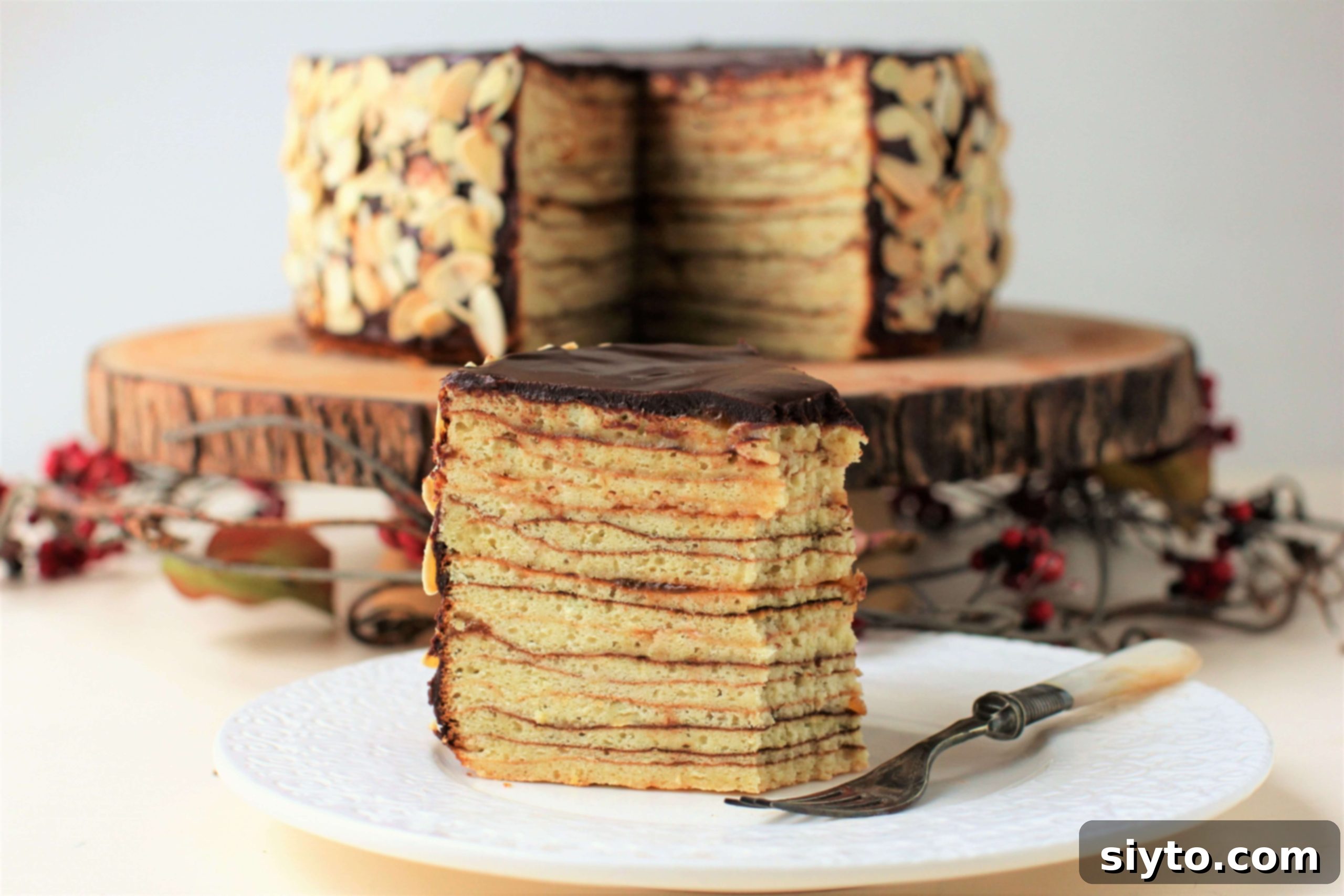
Baumkuchen: Master the Art of Germany’s Exquisite Tree Cake for Unforgettable Occasions
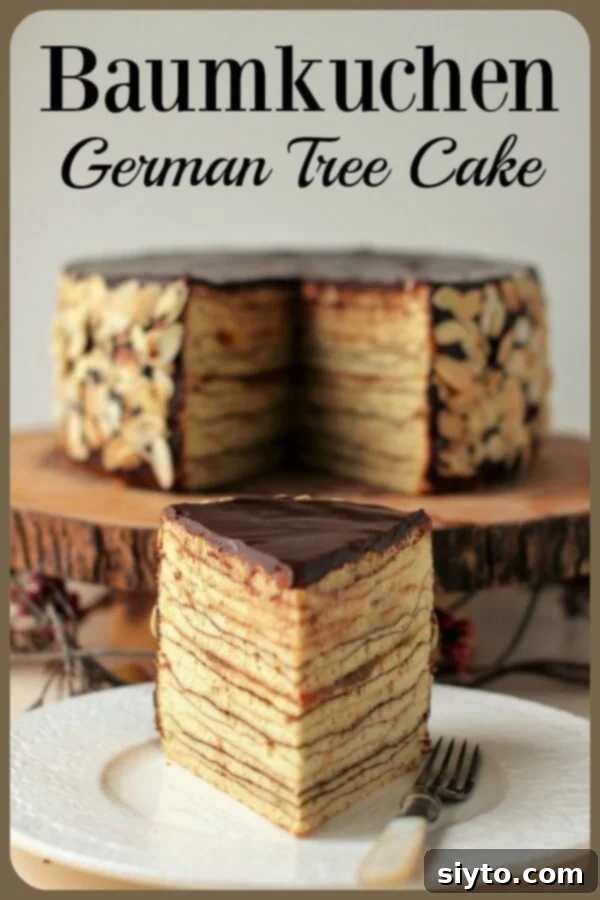
Baumkuchen, often celebrated as the “King of Cakes” in Germany, is an extraordinary confection that captivates with its unique appearance and delicate flavor. This impressive German tree cake is meticulously crafted by broiling numerous thin layers of batter, which, when sliced, reveal distinct rings reminiscent of a tree’s annual growth. The cake’s rich almond essence is beautifully complemented by a luscious chocolate glaze and a hint of fruity apricot. It truly stands as a stunning center-piece, perfect for any special occasion. The best part? You can create a simplified, yet equally magnificent, version right in your own kitchen! (Skip directly to the full recipe.)
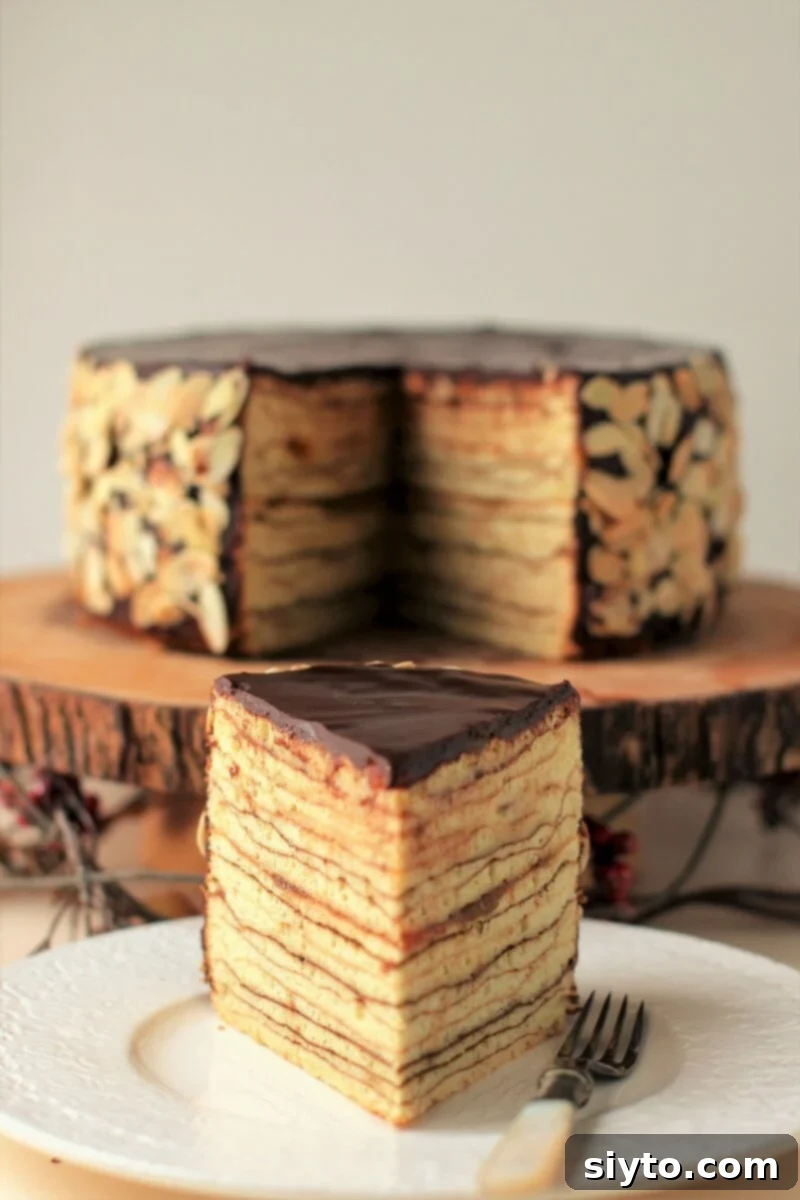
A traditional German Baumkuchen, or Baumtorte, which literally translates to “Tree Cake,” is more than just a dessert; it’s a culinary masterpiece destined for special celebrations. Imagine presenting this marvel to your guests and hearing the inevitable “ooohs” and “ahhhhs” – it’s a true showstopper that promises to impress both visually and gastronomically.
Pro Tip: Beyond its festive appeal, baking a Baumkuchen offers a wonderfully engaging project, especially if you find yourself with a leisurely afternoon at home. It’s a delightful culinary adventure that culminates in a deliciously sweet reward!
In Germany, Baumkuchen holds a revered place in culinary history, often considered a symbol of exquisite baking craftsmanship. Traditionally, these magnificent cakes are made by professional bakers using specialized equipment. This involves huge rotating rollers that are repeatedly coated with cake batter and then grilled in front of an open flame or a heating element. Each thin layer is carefully roasted and browned before the next is applied, gradually building up the cake to mimic the intricate age rings seen in a cross-section of a tree trunk. This meticulous process creates distinct waves and varying shades of golden-brown layers, making each slice a work of art. Once the massive roll is complete, it’s typically finished with a smooth fondant or rich chocolate glaze, then sliced into elegant slabs for sale. Germans cherish this rich, elegant cake, particularly during the festive Christmas season, where it serves as a cherished culinary tradition. However, its popularity ensures it’s available throughout the year for those seeking a taste of authentic German patisserie.
Over the years, I’ve embarked on the rewarding journey of perfecting my homemade Baumkuchen recipe. This past Christmas, the desire to truly master my version became an irresistible urge. My daughter-in-law and I decided to tackle this ambitious project together, aiming to create a spectacular Baumkuchen for my son’s Christmas Day birthday. It was a memorable culinary adventure, filled with shared laughter and invaluable lessons. After three batches of batter, a generous roll of almond paste, a few beads of sweat, and an abundance of good humor, we finally achieved our crowning glory. By combining the best elements salvaged from a couple of batches, we produced an extra-high, utterly show-stopping cake that was truly worthy of a grand Christmas birthday celebration.
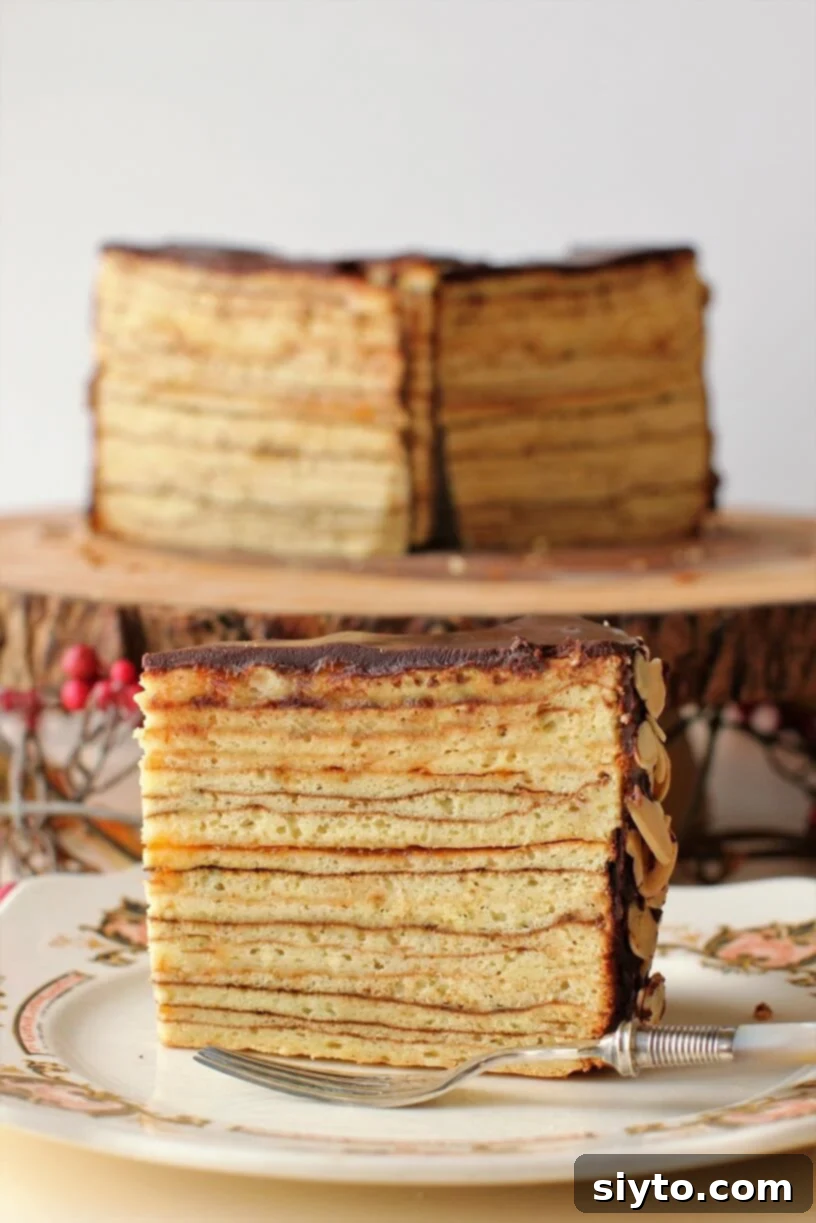
A homemade Baumkuchen is a rich and sophisticated cake, typically featuring a generous amount of almond paste (or a blend of almond flour and honey), plenty of butter, and a dozen eggs, with whipped whites acting as the natural leavening agent. Its complex and profound flavor profile stems from the careful caramelization of each individual batter layer, beautifully enhanced by the sweet notes of almonds, a hint of rum, and the bright tang of apricot jam. All of this deliciousness is then enveloped in a luscious chocolate glaze. While apricot jam is often incorporated into home-baked versions for its vibrant flavor and moisture, it can be omitted if preferred. The texture of a Baumkuchen is distinct – firmer and denser than a typical fluffy cake, often compared to a delicate pound cake. Its elegance lies in its simplicity and the effort invested in its creation. Unlike standard cakes baked in a single go, Baumkuchen requires individually broiling thin layers of batter, one on top of the other. This demands a little more time and focused attention than simply placing a cake in the oven, but the unique and spectacular end result is profoundly rewarding. Many bakers find the layering process to be a therapeutic and deeply satisfying activity.
Essential Lessons Learned While Crafting Baumkuchen
Rule Number One: The Sweet Foundation
Never, ever forget the sugar!
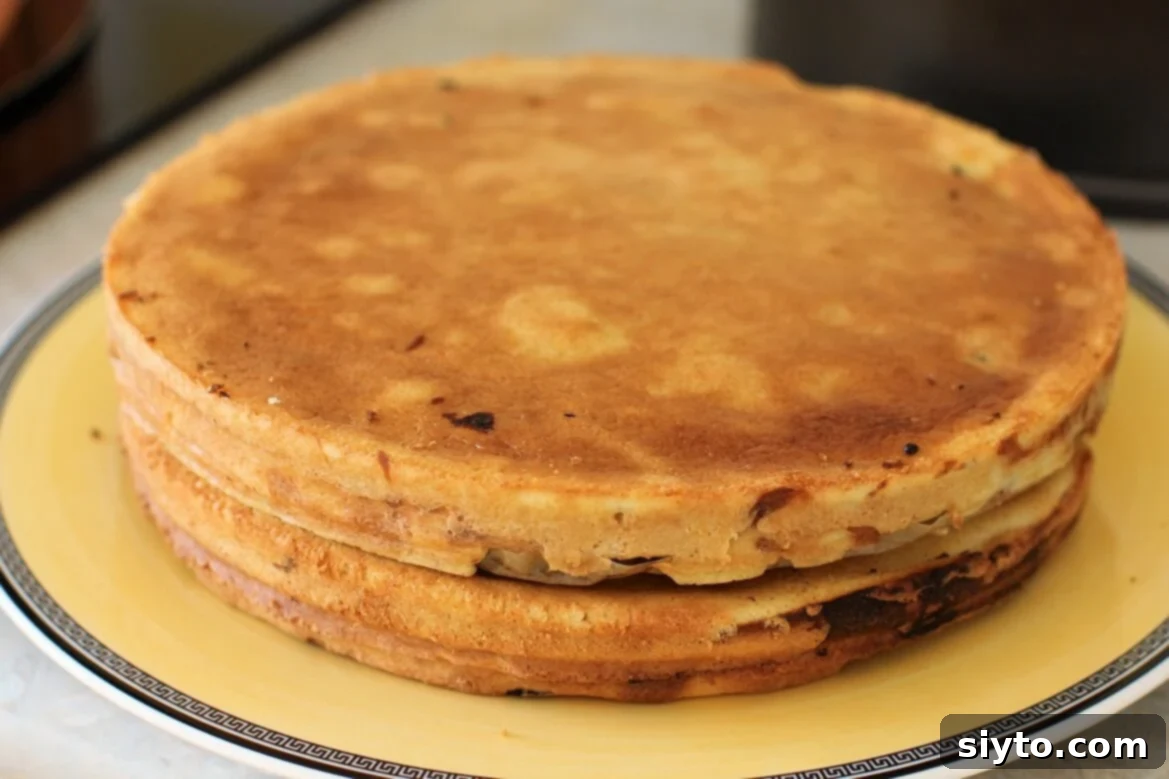
Omitting sugar from your Baumkuchen batter can lead to a rather disappointing outcome – think more like a flat, dense pancake than a beautiful layered cake. While it might be great for an impromptu game of frisbee, it certainly won’t pair well with your morning coffee. Through this memorable mishap, I learned a crucial baking lesson: sugar isn’t just for sweetness; it provides essential structure, lift, and tenderness to a cake. While minor reductions are often possible in recipes, complete omission results in an unappetizing, almost inedible creation. We painstakingly grilled every layer, only to be baffled by our cake’s perplexing flatness. The mystery was solved when we spotted the forgotten sugar, still patiently waiting in its measuring cup on the counter. Oops indeed!
Rule Number Two: Adherence to Technique
Always FOLLOW the directions precisely!
Resist the temptation to take shortcuts, especially when it comes to incorporating ingredients. For instance, you might think, “Why bother sifting the flour and gently folding it in with the egg whites? I’ll just whip it directly into the yolks and save myself a step!” (Referring back to Rule #1, the result is often the same: a flat, rock-heavy pancake, perhaps still good for a frisbee game). I now understand the critical importance of folding the flour into the combined beaten egg yolks and whites. Adding flour directly to a stiff yolk mixture creates a dense batter that doesn’t blend harmoniously with fluffy egg whites. This leads to a lumpy, unmanageable batter that is difficult to spread into the thin, even layers required for perfect grilling. Trust the process; the instructions are there for a reason!
My husband and the birthday boy certainly had some festive fun playing frisbee with our sugarless, lumpy-battered #Failcakes that Christmas:
video courtesy of Amanda K. Morales
Rule Number Three: Oven Endurance
Allow your broiler to rest between long baking sessions.
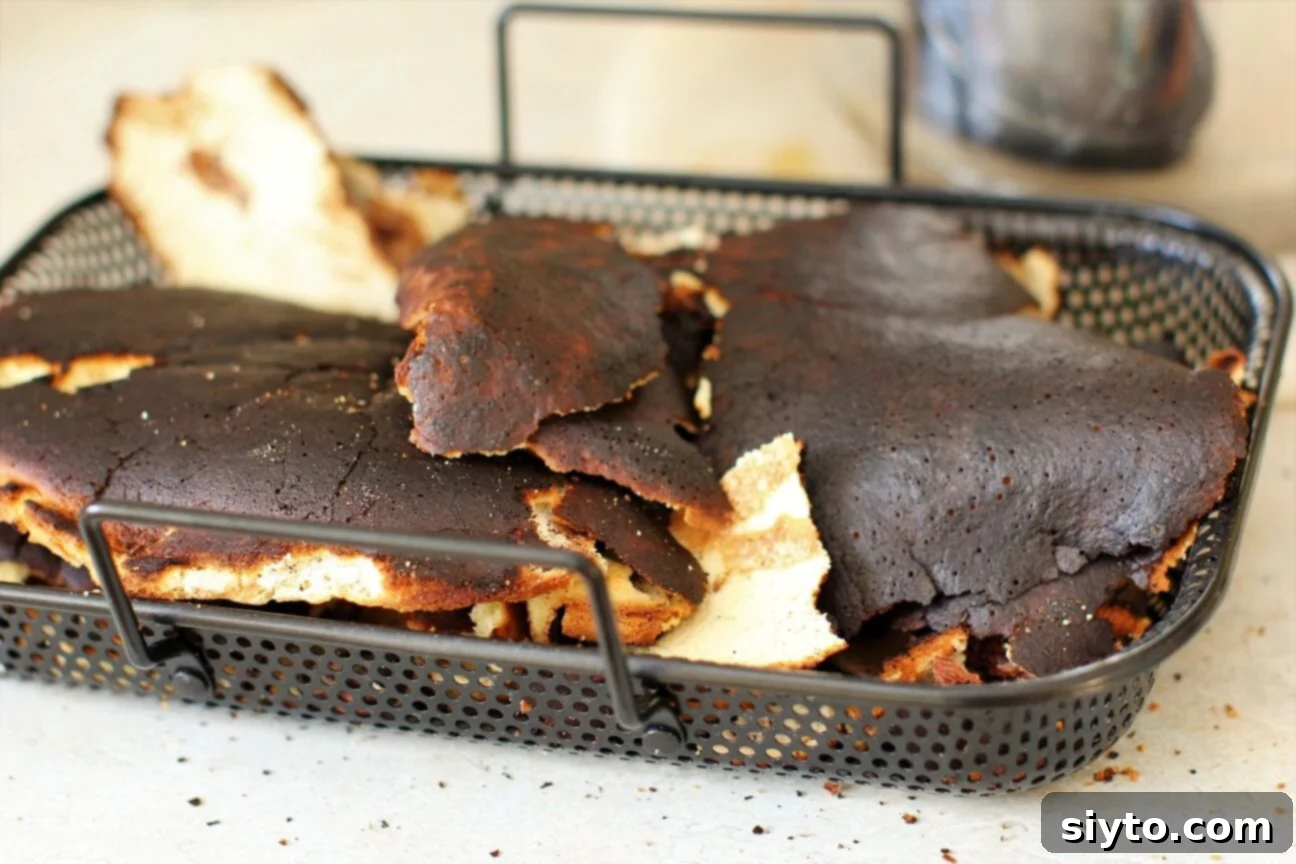
Broiler elements are not designed for continuous, extended use. Leaving them on for too long, especially for sequential baking projects, can cause them to become temperamental or “wonky.” They may begin cycling on and off unpredictably to regulate temperature, leading to inconsistent heat. This can result in cake layers that go from perfectly cooked to unexpectedly burnt in mere seconds. Such surprises certainly don’t contribute to a beautiful (or edible) Baumkuchen. After our initial #Failcake (as per Rule #1), we, being gluttons for punishment, immediately attempted a second Baumkuchen. It was then that we gained valuable insight into the inner workings of a broiler. Good to know: broiler elements are not meant to be used for two hours straight!
Practical Tips for Baking a Flawless Baumkuchen
While Baumkuchen may seem intimidating, the actual baking process is quite straightforward once you get into the rhythm. You’ll need either one 9-inch (23 cm) springform pan or, for a taller cake with a smaller circumference, two 8-inch (20 cm) springform pans. Using two smaller pans can also expedite the baking time, as you can broil two layers simultaneously. While two pans of the same size might not be common in every kitchen, a single 9-inch pan still yields an incredibly impressive and equally delicious result.
Begin by whipping up your batter (and remember, as per Rule #2, follow the directions carefully!).
Next, start spreading one thin layer of batter at a time into your prepared pan(s). Place the pan under a hot broiler and grill until the layer is beautifully browned and caramelized. This typically takes only about a minute, so vigilance is key! Continue this layering and grilling process, adding a thin brush of apricot jam every few layers for extra flavor and moisture.
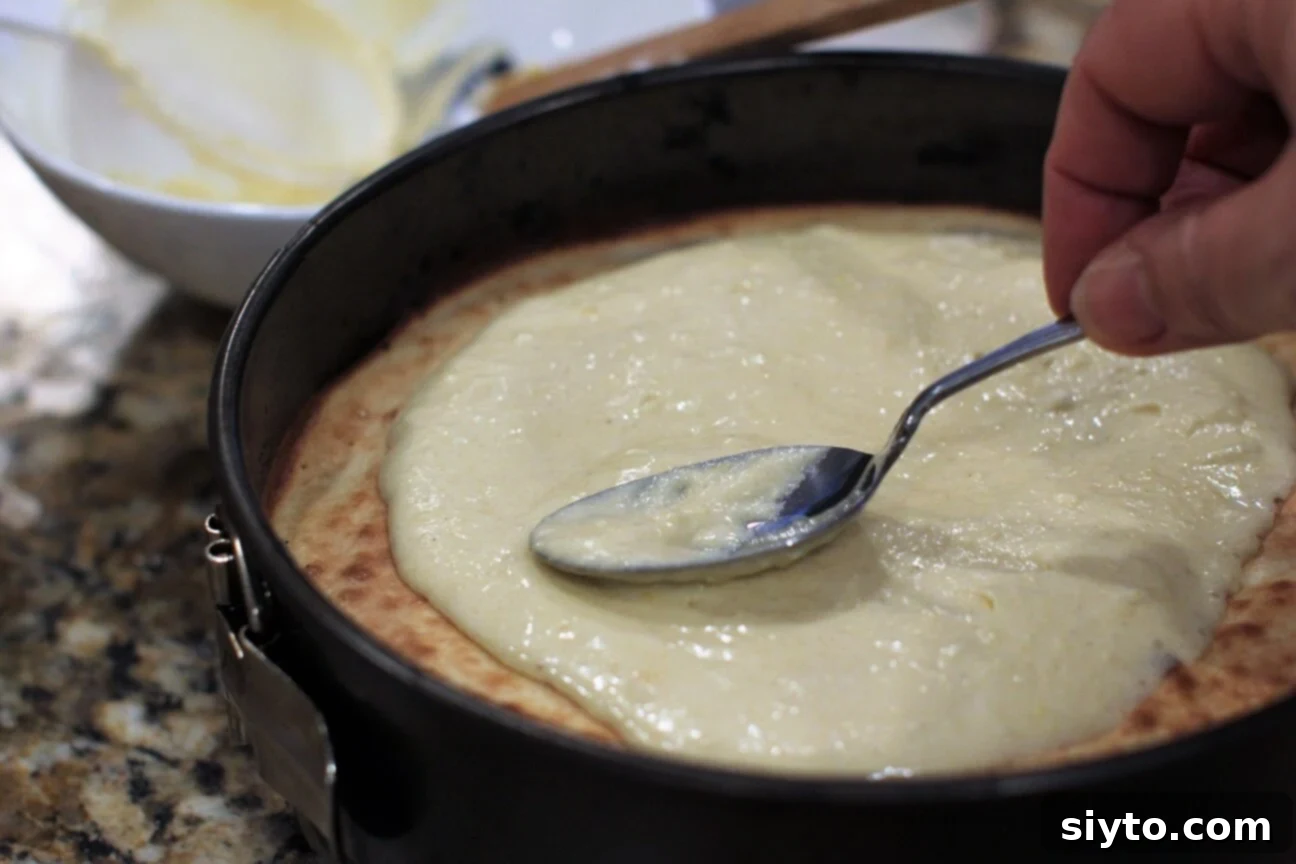
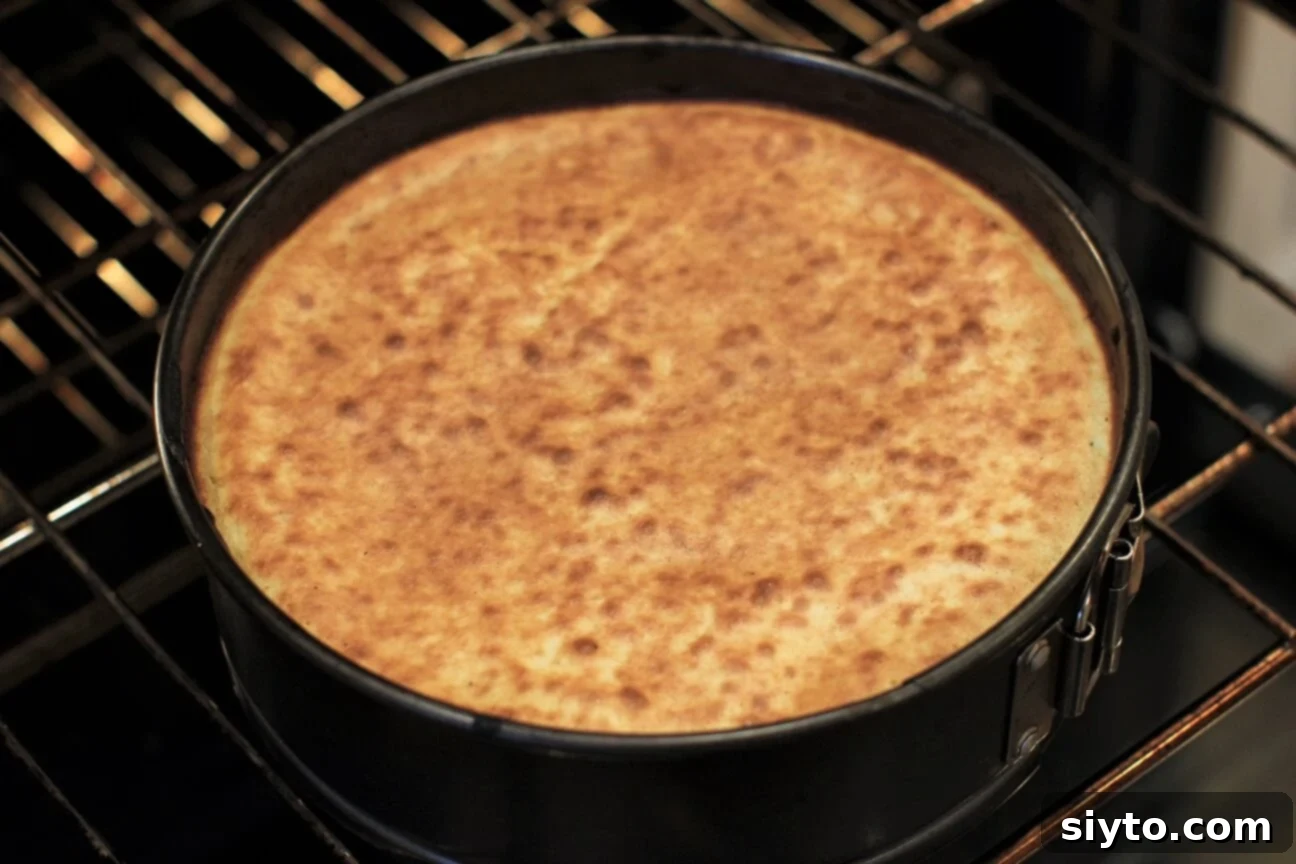
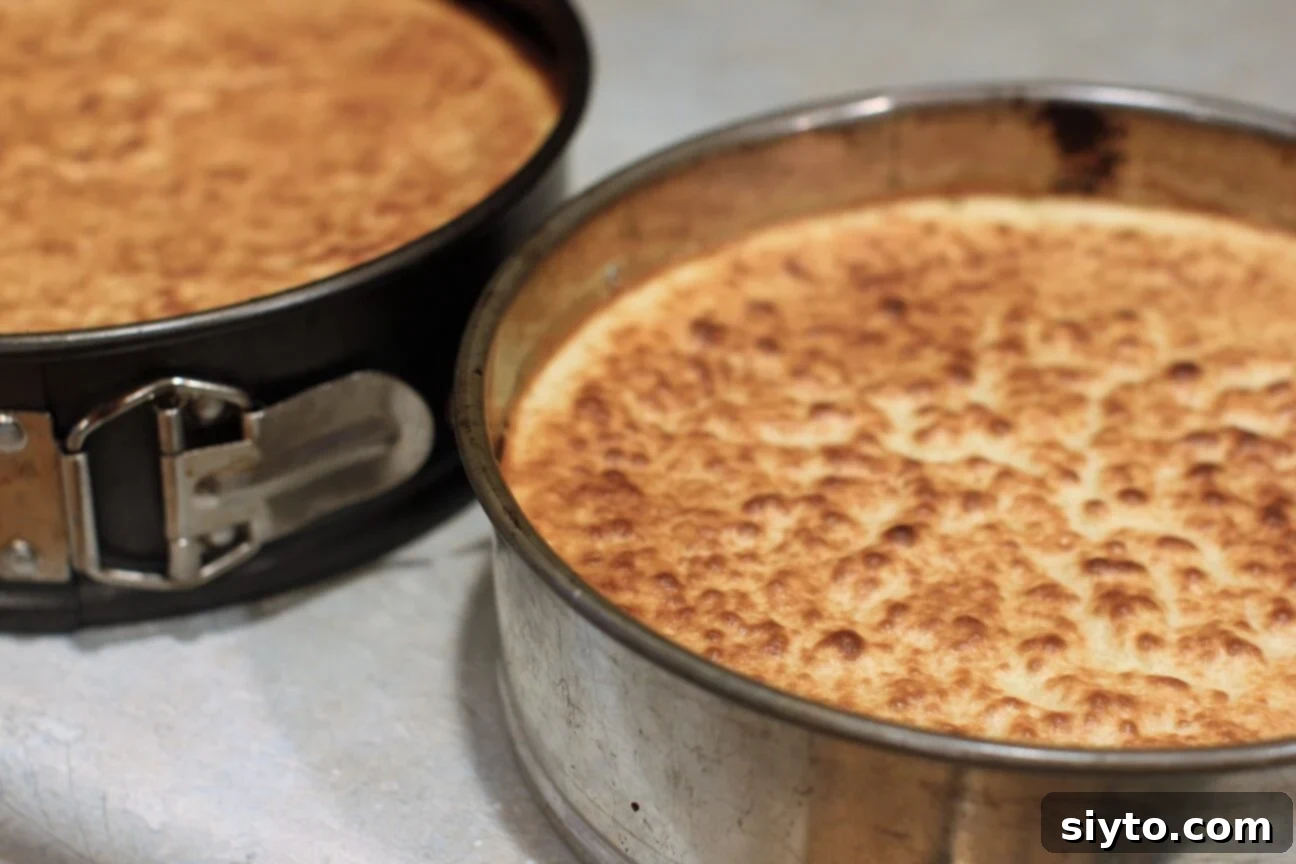
During one baking session, I used two pans with different finishes—one dark metal and one light metal. I observed that they browned quite differently. The lighter metal pan yielded a slightly nicer cake, with less browning around the edges, which is something to keep in mind when choosing your bakeware.
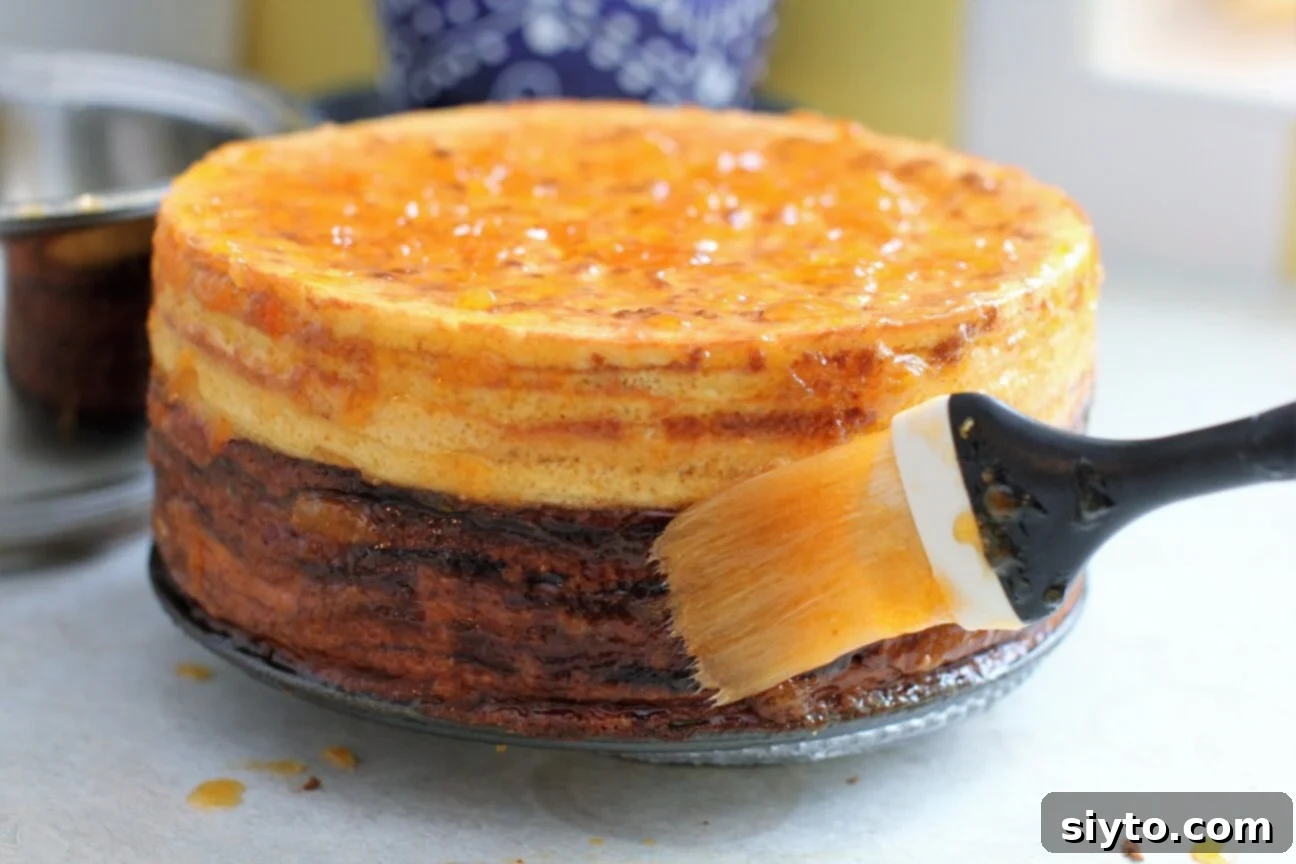
Once all the layers are cooked and the cake has cooled, generously spread a layer of warm apricot jam over the top and sides.
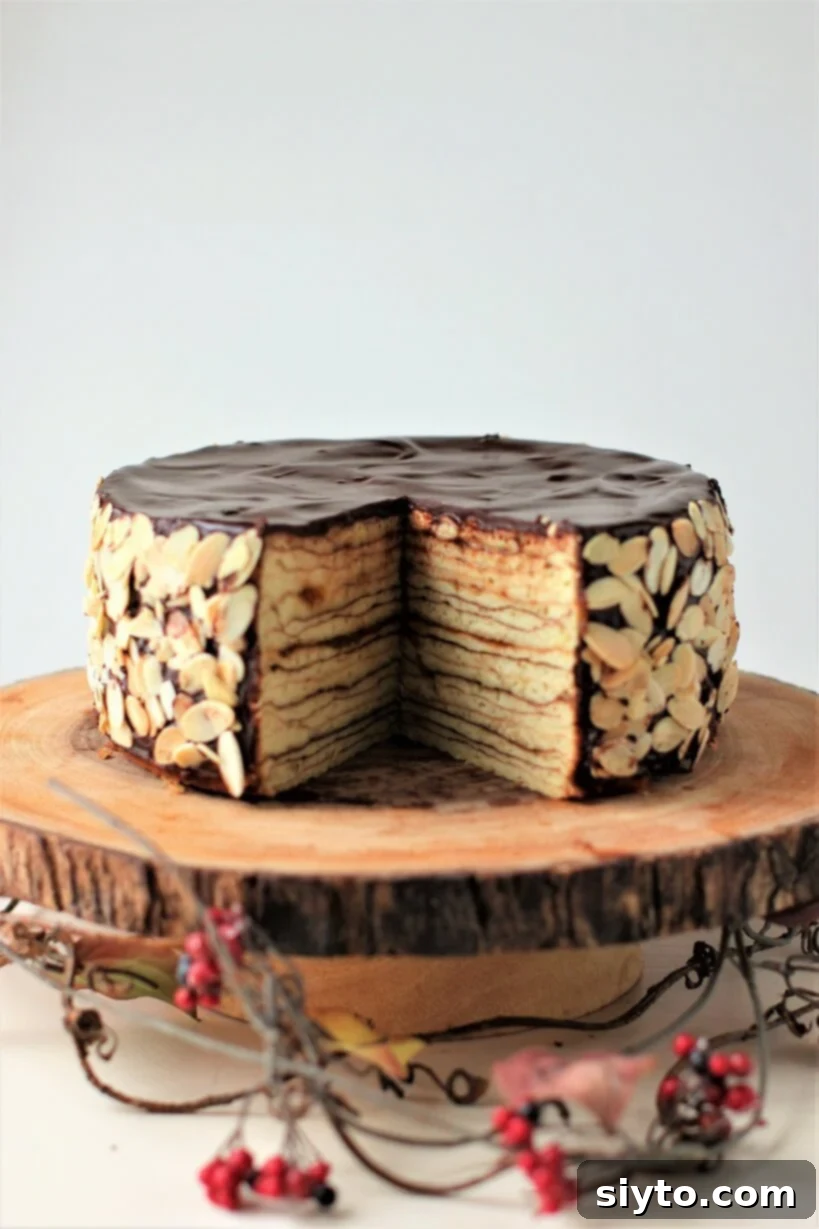
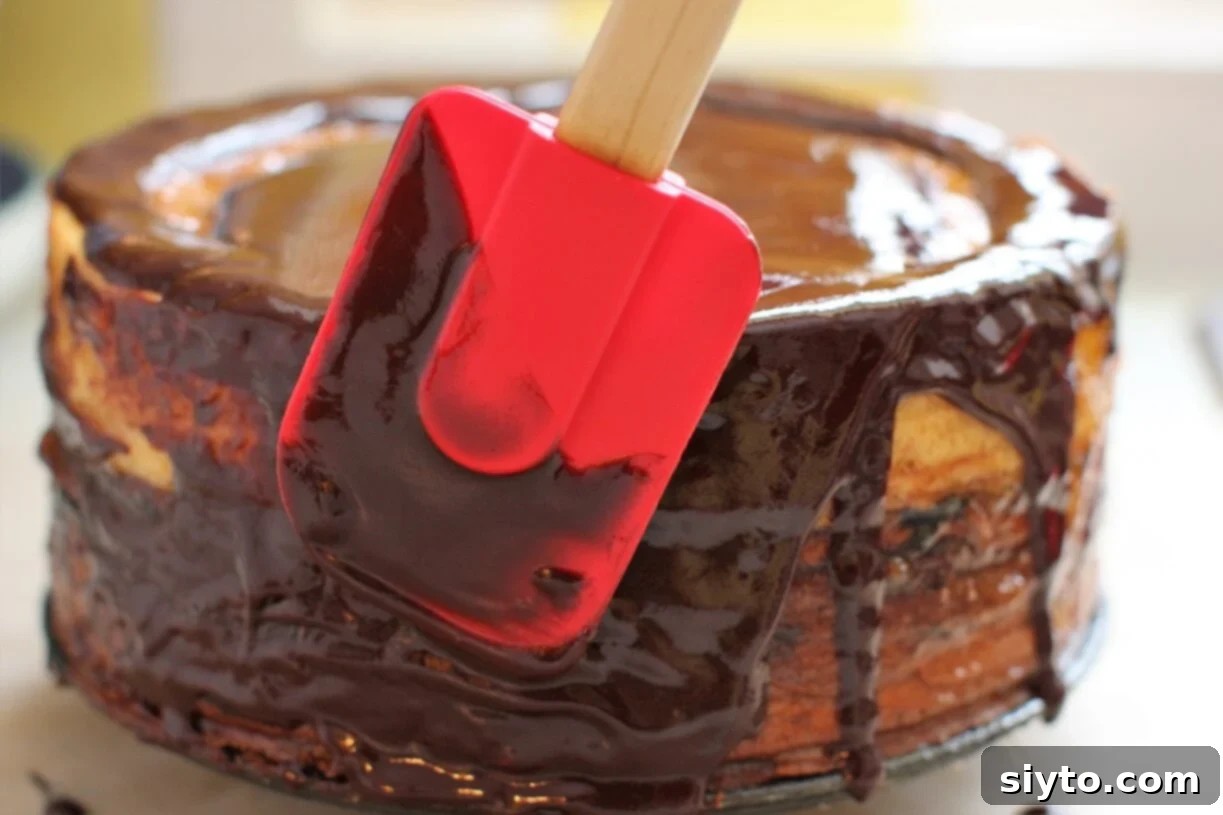
Then, cascade a luscious, silky chocolate and rum glaze over the entire cake, allowing it to drip elegantly down the sides.
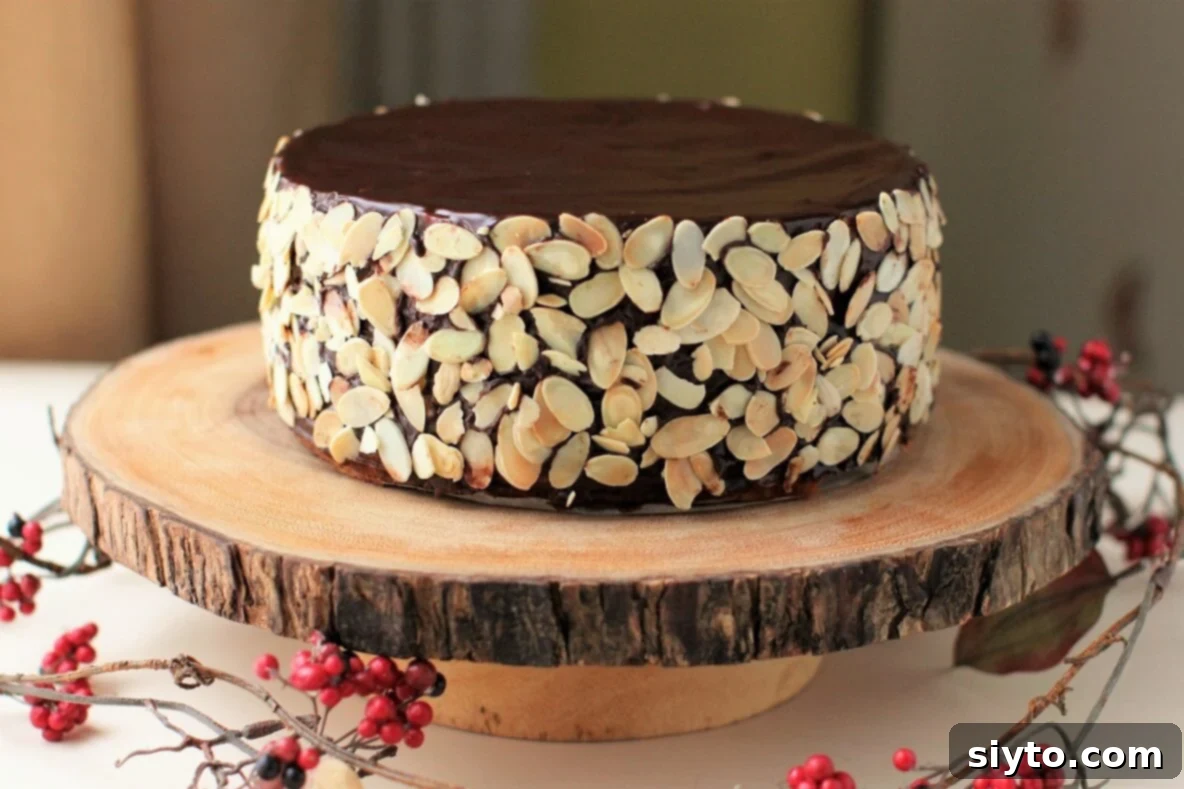
For an extra touch of sophistication and texture, you can decorate the sides with beautifully toasted sliced almonds.
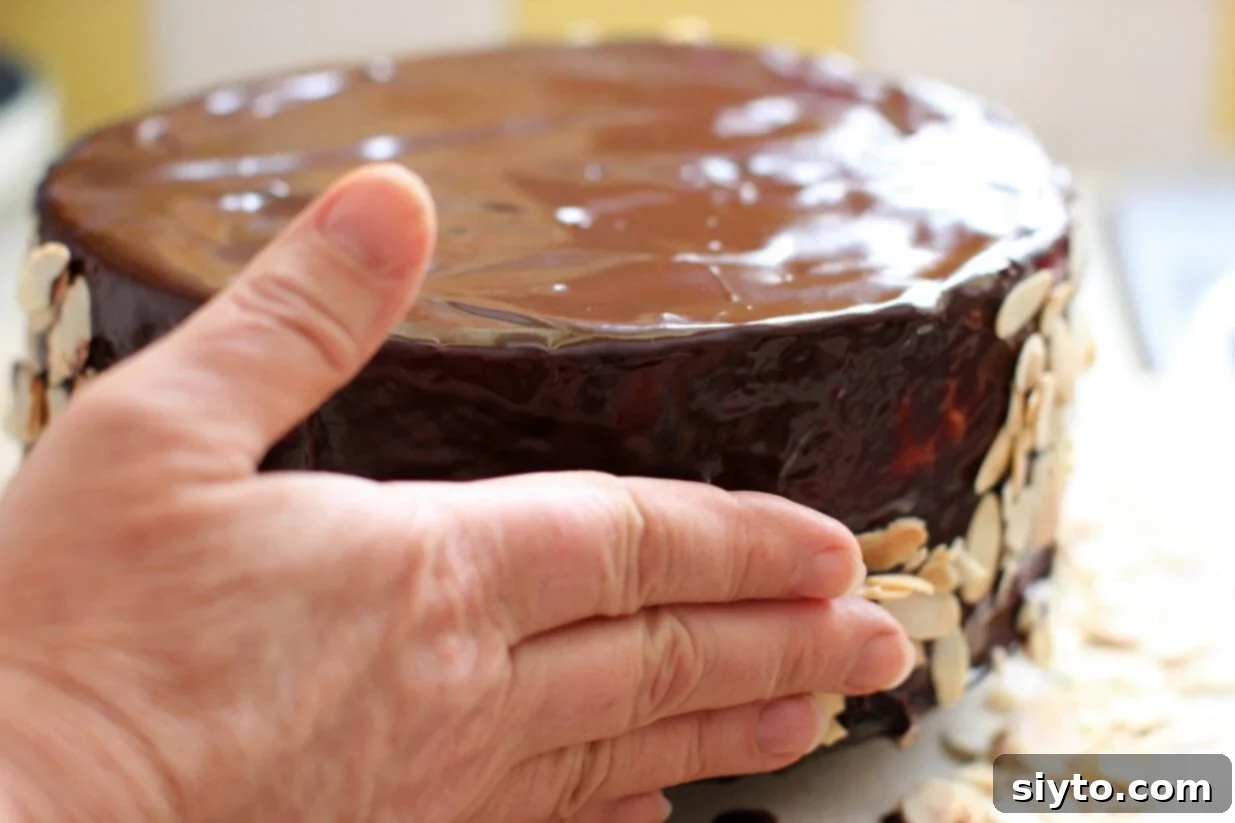
Just look at that magnificent beauty! The layers, the glaze, the almonds—it’s truly a sight to behold.
Finally, slice into this impressive creation and serve it with a freshly brewed cup of coffee. For an indulgent touch, a generous dollop of lightly sweetened whipped cream wouldn’t go amiss either. Each bite reveals the intricate layers, offering a delightful combination of textures and flavors that truly justify its regal title.
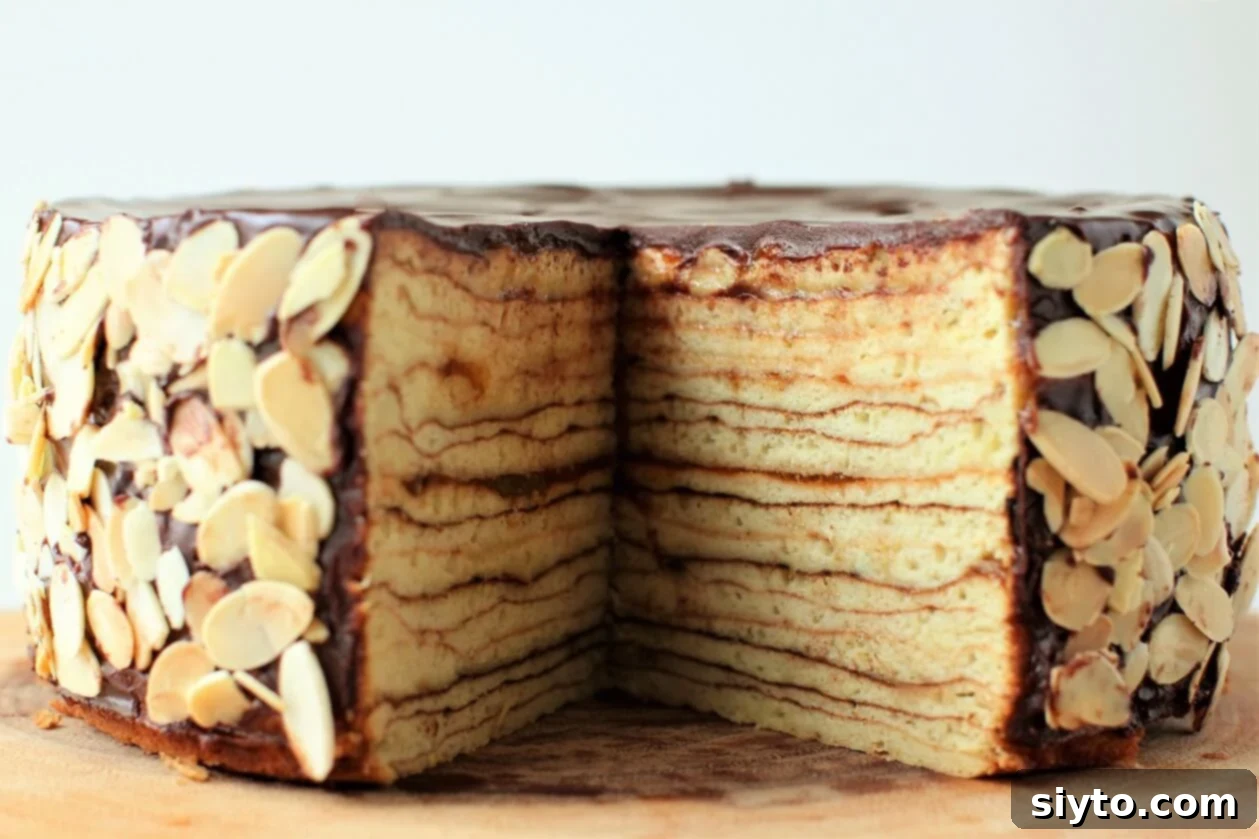
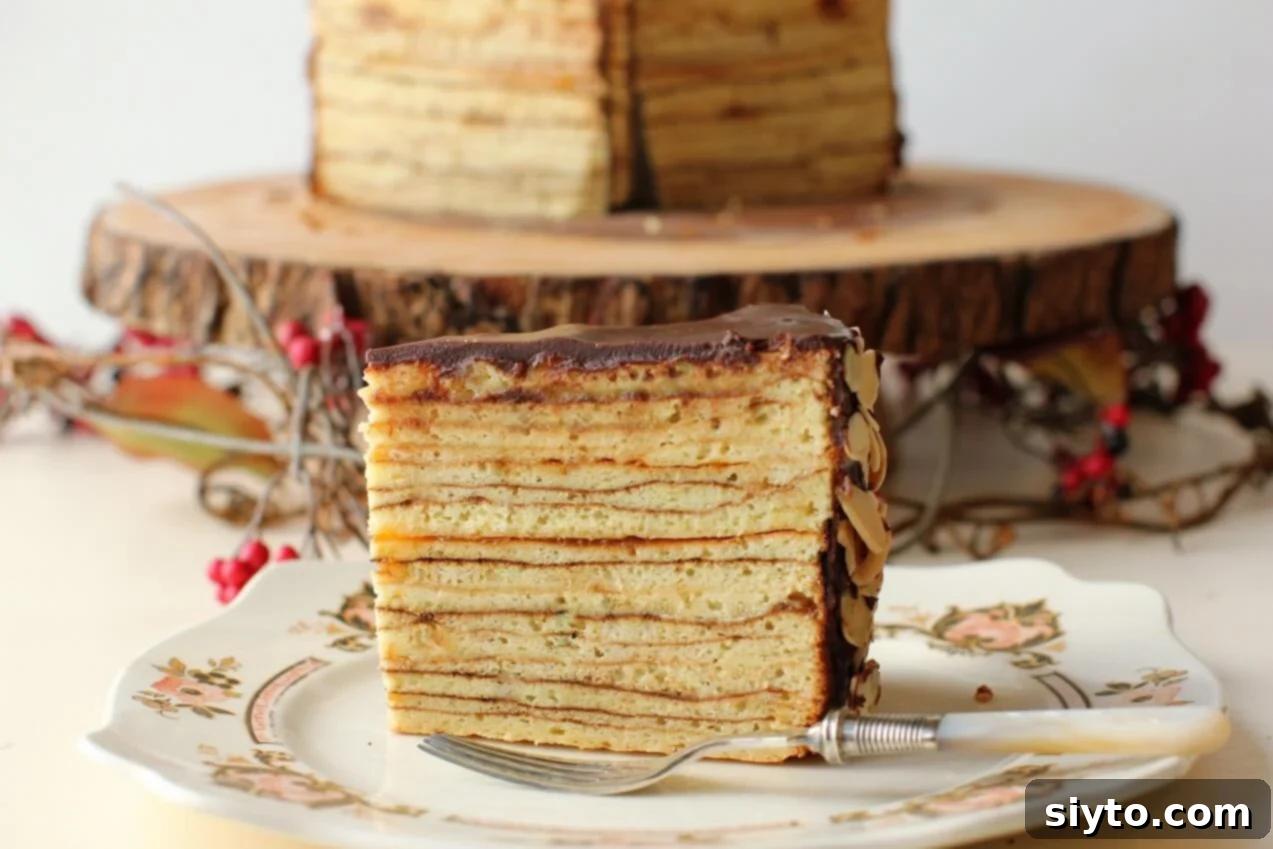
Indeed, it’s no wonder this exquisite dessert is affectionately known as the “King of Cakes.”
If you find yourself with a block of time and a desire for a rewarding culinary challenge, embarking on a Baumkuchen baking project is highly recommended. It’s an opportunity to create something truly special, impress your loved ones, and perhaps even establish a cherished family tradition for years to come as you become the resident expert in crafting this unique and wonderful cake.
Happy Baumkuchening!
* * * * *
Kitchen Frau Notes: I highly recommend reading through the entire recipe and instructions once or twice before you begin. While the instructions may appear lengthy, I assure you the process is not overly complicated once you get started. Essentially, you prepare a cake batter (similar to a standard cake), spoon a small amount into the pan, spread it thinly, broil it, and then repeat these steps until all the batter is used.
For convenience, Baumkuchen is an excellent make-ahead dessert. You can bake and freeze it, then simply defrost and glaze it on the day you plan to serve. This makes it ideal for stress-free entertaining.
The Baumkuchen can be made with or without the apricot jam layered within the cake. However, I strongly recommend using some jam: if you’re baking two cakes in separate pans, use about 2 tablespoons to join them together. Additionally, brushing approximately ½ cup of jam over the entire cooled cake before applying the chocolate glaze significantly enhances the flavor, adds moisture, and creates a smoother finish by sealing in any crumbs.
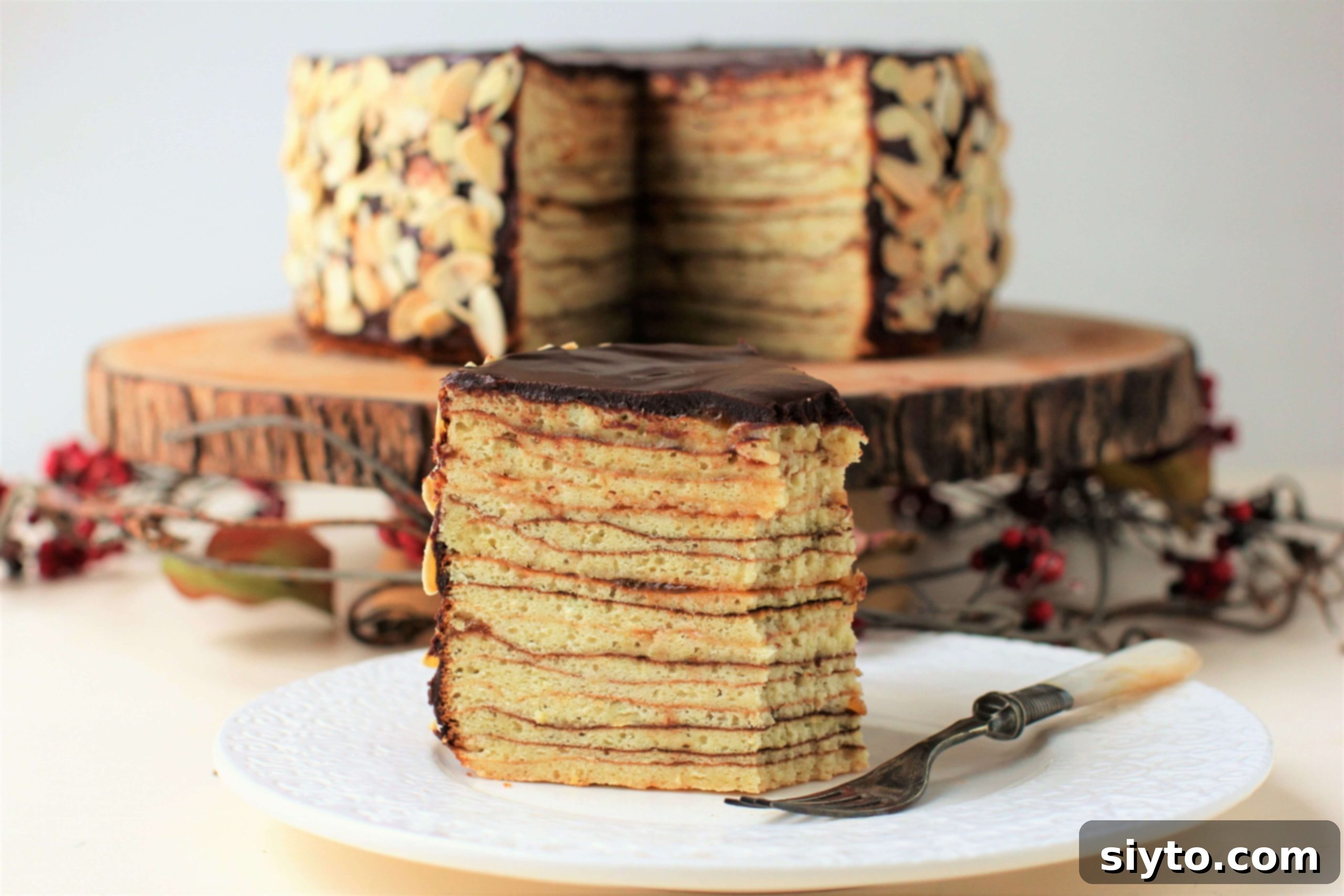
Baumkuchen (German Tree Cake) Recipe
Yields: 12 to 16 elegant slices
Prep time: 45 minutes
Bake time: 30-45 minutes
Ingredients:
- 180 grams (6.3 ounces) almond paste or 1 cup (100 grams) almond flour + ¼ cup (80 grams) honey + ½ teaspoon pure almond extract
- 250 grams (1 cup + 2 tablespoons) soft unsalted butter
- 12 large eggs, separated
- 30 ml (2 tablespoons) rum (optional, but recommended for flavor depth)
- 1 teaspoon pure vanilla extract
- ½ teaspoon salt (omit if using salted butter)
- 250 grams (1¼ cups) natural evaporated cane sugar
- 125 grams (1 cup) gluten-free flour blend (or regular all-purpose flour for non-gluten-free)
- 125 grams (1 cup) cornstarch
- 280 grams (1 cup) apricot jam, divided (use only ½ cup if not including it between the layers)
For Finishing the Cake:
- 150 grams (¾ cup) chocolate chips or chopped semi-sweet/dark chocolate
- 80 ml (⅓ cup) whipping cream
- 1 tablespoon coconut oil or butter
- 1 tablespoon rum (optional, for glaze)
- Optional: 100 grams (1 cup) toasted sliced almonds (toasted until golden; about 8 to 10 minutes in a 350°F/180°C oven)
Instructions:
- Prepare Your Broiler and Pans: Preheat your oven’s broiler grill. Adjust the top rack so it is approximately 7 inches from the top heating element. Grease your springform pan(s) thoroughly and line the bottom(s) with a fitted circle of parchment paper. You will need three mixing bowls: a large one for the beaten egg whites, a medium one for the yolk mixture, and a small one for the dry ingredients.
- Cream Almonds and Butter: In the medium bowl, use an electric mixer to cream together the diced almond paste (or the almond flour, honey, and almond extract mixture) with the softened butter until the mixture is smooth, light, and fluffy.
- Separate Eggs: Carefully separate the eggs. Place the yolks into a spouted measuring cup or a small bowl and the whites into the large mixing bowl (ensure it’s large enough to hold the beaten whites plus the rest of the batter).
- Incorporate Yolks and Flavorings: Continue beating the almond paste and butter mixture. Add the egg yolks one at a time, beating well after each addition until fully incorporated. Stir in the rum, vanilla, and salt, beating again until well combined. Set this yolk mixture aside.
- Whip Egg Whites: Using clean beaters (a second hand mixer can be very helpful here), beat the egg whites in the large bowl until soft peaks form. Gradually add the sugar, continuing to beat until the egg whites are thick, glossy, and you can no longer feel any sugar grains when rubbing a small amount between your thumb and forefinger.
- Temper Yolks: Scoop out about ¼ of the beaten egg whites and gently stir them into the reserved yolk mixture until just combined and not deflated. This crucial step helps to temper the yolks, allowing them to incorporate more smoothly into the main egg white mixture.
- Sift Dry Ingredients: Sift together the flour and cornstarch into the small bowl. If you don’t have a flour sifter, a fine-mesh sieve works perfectly.
- Fold Batter: Add one-third of the tempered egg yolk mixture to the beaten egg whites in the large bowl, then sprinkle one-third of the flour mixture over it. Using a silicone spatula, gently fold these ingredients together until just combined. Repeat this process two more times until the flour and yolks are fully incorporated, creating a large bowl of fluffy batter. Be careful not to over-fold, as this can deflate the batter, and you want it to remain light and airy.
- Prepare Apricot Jam (Optional): If you plan to use apricot jam between the layers (which I highly recommend for extra flavor and moisture), heat ½ cup of the jam in a small saucepan over low heat or in a microwave-safe bowl until it is melted and smooth. Have it ready for immediate use.
- Layer and Broil:
- If using a single 9-inch springform pan, place a heaped half-cup of batter into the prepared pan.
- If using two 8-inch springform pans, place an even half-cup of batter into each pan. (A ½-cup dry-measuring cup and a small spatula work well for this.)
Smooth the batter into a thin, even layer with the back of a spoon or a spatula, ensuring it reaches the edges of the pan. Place the baking pan (or pans) on the rack under the broiler and grill the layer until the top achieves a beautiful dark golden brown. Watch carefully! This usually takes only about 45 to 60 seconds, though the very first layer might take slightly longer.
- Continue Layering and Watching: Remove the pan(s) from the oven, add another layer of batter, and broil again. Be extremely vigilant, as batter can go from uncooked to burnt in a matter of seconds. Broilers can also cycle on and off to maintain temperature, meaning some layers may cook much faster than others. You want each layer browned enough to be fully cooked and visible when sliced, but never burnt. Strive for flat, even layers to avoid a domed or dipped top on your finished cake.
- Add Jam Layers: While continuing to spread and broil layers, if you are using apricot jam, brush a thin layer of the melted jam onto the cake every third batter layer. If using a 9-inch pan, continue until you’ve used up the entire ½ cup of heated jam. If using two 8-inch pans, reserve about 2 tablespoons of the jam to join the two cakes later.
- Complete Broiling: If using a 9-inch pan, you should aim for approximately 12 batter layers. For two 8-inch pans, expect about 8 layers in each, totaling 16 layers. The entire broiling process for all layers will take between 30 to 45 minutes, depending on the number of pans used.
- Cool and Assemble: Once the last layer is cooked, set the cakes aside to cool completely within their pans. Once cooled, carefully remove the springform pan sides. If you used two 8-inch pans, warm the reserved 2 tablespoons of jam (reheating if necessary) and spread it over one cake, then gently stack the second cake on top. At this stage, you can tightly wrap the cooled cake(s) in plastic wrap and glaze it the following day, or wrap it well and place it in a freezer bag to freeze for up to 3 months for a future special occasion.
- Glaze the Cake:
- Prepare Apricot Glaze Base: Heat the remaining ½ cup of apricot jam in a small saucepan, mashing any larger apricot chunks with a fork until smooth. Using a pastry brush, generously coat the entire top and sides of the Baumkuchen with this warm jam, pressing any small lumps into any depressions for a smooth base. Use all of the jam. Let the cake sit uncovered for about an hour to allow the jam to set and become slightly tacky.
- Prepare Chocolate Glaze: In a small saucepan, combine the chocolate chips (or chopped chocolate), whipping cream, coconut oil (or butter), and rum (if using). Heat over very low heat, stirring frequently, until about three-quarters of the chocolate pieces have melted. Remove the saucepan from the heat and continue stirring until all the chocolate is completely melted and the glaze is smooth and beautifully shiny. Allow the glaze to cool for a few minutes until it thickens slightly to a flowing but spreadable consistency, similar to a thin pudding.
- Apply Glaze: Place the Baumkuchen (still on its springform base) onto an upturned saucer, which is then placed on a piece of wax paper or parchment paper to catch any drips. Pour the chocolate glaze in a puddle onto the center of the cake’s top. Using a spatula, gently coax small amounts of glaze towards the edges, allowing it to elegantly drape down the sides. Systematically spread the glaze over sections of the side, continuously bringing more glaze from the top down until the entire circumference is covered. Finally, smooth the glaze on the top of the cake.
- Add Almonds (Optional): You can let the glaze set as is, or you can add toasted sliced almonds to the sides. Allow the glaze to partially set until it’s tacky but not fully hardened. Then, take small handfuls of toasted sliced almonds in your palm and gently pat them onto the sides of the cake. Pick up any fallen almonds and press them into any bare spots to ensure the sides are evenly covered.
- Serve: Once the glaze has fully set, use two flat pancake flippers or large spatulas to carefully slide the cake off its base and onto a serving plate. Alternatively, you can serve it directly on the springform base if preferred. Baumkuchen is delightful served simply, but it’s extra special with mounds of lightly sweetened whipped cream on the side.
Makes 12 to 16 slices of delicious, show-stopping Baumkuchen.
Guten Appetit!
Want to receive new Kitchen Frau recipes directly to your email? Sign up here and you’ll get a handy and useful kitchen tip along with each recipe, too. (No spam ever.)
If you like my recipes, follow me on Instagram, Pinterest, Twitter, and Facebook. You’d make my day!
PIN IT HERE to save the recipe for later:
You might also like these other delightful German and European cake recipes:
Feuerwehrkuchen (German ‘Fire Brigade’ Cake)
Classic German Chocolate Cake
Versunkener Apfelkuchen (Sunken Apple Cake)
Authentic Polish Honey Cake