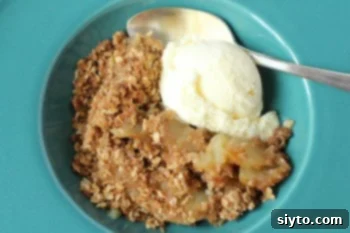
The Heart of Canadian Cuisine: Exploring Our Culinary Identity with a Classic Apple or Rhubarb Crisp
Welcome to a journey into the soul of Canadian cooking, where traditional comfort meets diverse culinary influences. At its core, Canadian food isn’t just about ingredients; it’s about the stories, the heritage, and the rich tapestry of cultures that have shaped our tables. This exploration culminates in a beloved, old-fashioned dessert that perfectly encapsulates this spirit: a tangy fruit crisp with a satisfyingly crunchy oat topping. It’s pure comfort food, a timeless classic that never goes out of style. (Jump straight to the recipe.)
The Canadian Food Experience Project: Defining Our Culinary Soul
This article is a proud contribution to The Canadian Food Experience Project, an initiative that commenced on June 7, 2013. Through this collaborative endeavor, participants from across Canada share their personal and regional food experiences. Our collective aim is to illuminate and clarify our unique Canadian culinary identity on a global stage, expressed through the harmonious cadence of our diverse voices. We invite you to join us in this ongoing exploration of what it truly means to eat Canadian.
This month’s focus delves into a deeply personal theme:
Identifying My Canadian Culinary Voice
It’s hard to believe that a whole year has passed since I began contributing posts dedicated to Canadian food. The time has flown by, filled with reflection and discovery. Throughout this period, I’ve dedicated considerable thought to understanding what Canadian food truly is and, more importantly, what it signifies to me personally. Ironically, after a year of deep diving, I find myself further from a definitive answer than when I started.
How does one possibly encapsulate and clarify the quintessential food culture of a nation as geographically immense and culturally diverse as Canada? Our country is often celebrated as a mosaic of cultures, a place where variety isn’t just a characteristic but the very essence of its identity. Instead of viewing our food identity as a smooth, homogenous sauce that results from cultures melting together, I prefer to envision it as a vibrant stew pot. In this culinary metaphor, the individual ingredients – representing distinct cultures and traditions – remain visible and retain their unique integrity. Each flavor is present, distinguishable by taste, yet these ingredients have simmered together long enough to absorb and beautifully complement the nuances of the other components in the stew. The result is something truly unique, exquisitely blended, and profoundly delicious.
A Family’s Culinary Evolution: My Mother’s Story
My own family’s German culinary heritage, with its distinctive flavors and techniques, has certainly been tossed into this Canadian “stew pot.” While much of its original character has been preserved, it has been continually enhanced and subtly altered by the myriad other cultures we’ve encountered throughout our lives here. When my mother married my father, she embarked on a journey of culinary adaptation. She learned a distinctly different style of German cooking from her in-laws, whose traditions hailed from a different part of German Eastern Europe than her own. As a newlywed, eager to embrace her new surroundings, she diligently clipped recipes from magazines and learned to prepare “Canadian” foods, guided by the wisdom and generosity of her new neighbors.
Our family’s culinary evolution continued to unfold as we moved across Canada. When we lived on a sugar beet farm in southern Alberta, my mom eagerly exchanged recipes with our Japanese neighbors. This exposure introduced her to ingredients she had never encountered before, broadening her pantry and her palette. She spent countless hours visiting with her Dutch friend down the road, absorbing new dishes that quickly became cherished family favorites. Later, my mom even took a Chinese cooking course, refining her skills and gaining valuable pointers from the insightful Chinese owner of our small farming town’s grocery store.
Years later, when my parents made their home on Vancouver Island and my father pursued a career as a commercial fisherman, new culinary horizons opened up. Many recipes were lovingly shared over coffee with my mom’s new Italian friend, who introduced her to the vibrant flavors of Mediterranean cuisine. My mom also learned to prepare freshly caught seafood with expertise, gleaning tips and techniques from the wives of other fishermen in the community. Their journey continued to northern B.C., where she forged a friendship with a Filipino lady, from whom she learned entirely new cooking methods and invaluable culinary insights. Throughout these experiences, her German cooking style remained the foundational core, yet it was in a constant state of beautiful, delicious evolution.
A Taste for Adventure: My Father’s Influence and My Own Culinary Path
My father was far from the stereotypical “meat and potatoes” man often associated with his generation. He possessed a remarkably adventurous palate and actively encouraged my mother to experiment with different dishes and explore new ingredients. I vividly recall grocery shopping trips with my mom when I was young. If she spotted an unfamiliar fruit or vegetable in the bins, something she didn’t recognize, she would invariably toss a few into the shopping cart. We’d then embark on a family tasting adventure at home. If she didn’t know how to cook them, she wouldn’t hesitate to ask other shoppers who were buying them. This is how we first came to know and love eggplants, a discovery that soon led my mom to plant them in her own garden.
I remember a time when kiwi fruits and pomegranates felt like genuine novelties – those strange, exotic new fruits often took longer to arrive in the grocery stores of small prairie towns compared to the bustling city supermarkets. Fresh pineapples were an absolute rarity; we genuinely believed they only came in tins. What were those big, prickly, funny-looking fruits, we wondered? These early experiences instilled in me a profound sense of culinary curiosity. Today, there’s nothing I enjoy more than exploring vibrant ethnic markets, returning home with new and exciting foods to experiment with. I owe this adventurous streak in my cooking directly to my mom. To this day, when we get together, we still delight in these shared food discoveries. All of my mother’s extensive cooking experiences, her recipes, and her willingness to explore were lovingly passed down to me and my four sisters, becoming integral threads in the fabric of our own individual food stories. We, in turn, have added to this rich legacy as we learned new ways to cook from the diverse connections we’ve made throughout our lives.
Therefore, while I believe Canadian food is a magnificent mixture of each person’s ethnic background, beautifully interwoven with the influences of all the people they’ve learned from throughout their lives, it is also, at its very best, the food that brings profound comfort and happiness to individual families. It’s not just a national cuisine; it’s a deeply personal one.
The Quintessential Canadian Comfort: Apple or Rhubarb Crisp
Canadian food is the nourishment we’ve each grown up with – the cherished recipes carefully written by hand in splattered notebooks, lovingly passed down from mother to daughter, sister to friend, constantly adapted and subtly altered to perfectly suit each family’s unique tastes and preferences.
I had initially planned to share a beef stew recipe for this post, aiming for a thematic connection with my “stew pot” analogy for Canadian food. However, when I polled my family, asking them which recipe they remembered most fondly from childhood and which they felt best typified Canadian food within our family’s culinary tradition, the unanimous answer was the humble yet utterly delightful apple or rhubarb crisp. This simple dessert resonated deeply, evoking memories of warmth, family gatherings, and comforting indulgence.
So, if our neighbors to the south can proudly claim their iconic apple pie, then perhaps we Canadians can wholeheartedly embrace our apple crisp as a true national comfort food – at least within the context of our own family’s culinary identity. This, after all, is what Canadian cooking is fundamentally about: each individual family and its unique “stew pot” of flavors, combining influences from the vast array of cultures cohabiting in this immense country, all coming together to create the foods that bring us fond memories and the undeniable comfort of childhood.
* * * * *
Recipe: Simple & Delicious Apple or Rhubarb Crisp
Kitchen Frau Notes: This recipe offers a wonderfully basic crisp foundation that is incredibly versatile and open to countless adaptations. When using apples, I typically opt for tart varieties to balance the sweetness of the topping. If my apples are on the sweeter side, I reduce the brown sugar in the topping to just ½ cup. For a rhubarb crisp, I recommend sprinkling an additional ¼ cup of sugar directly over the diced fruit before adding the topping, as rhubarb is quite tart. For ultimate convenience, I sometimes prepare a large batch of the crumbly topping, then freeze it in a sturdy zip-top bag. This allows me to scoop out the exact amount I need for a quick dessert on busy weeknights or when unexpected company arrives, spreading it over any fruit or berries I have on hand in the freezer or fruit bowl. It’s incredibly handy and a true time-saver!
Apple or Rhubarb Crisp
- ¼ cup (55gms) unsalted butter or coconut oil, softened
- ¾ cup lightly packed brown sugar (use ½ cup for sweeter fruits)
- ⅓ cup (50gms) all-purpose flour (or a gluten-free alternative like buckwheat, millet, brown rice, or sorghum flour)
- 1 cup (100gms) rolled oats (ensure gluten-free if necessary)
- ¼ teaspoon ground cinnamon
- 6 medium apples, peeled, cored, and sliced; OR 4 cups diced fresh or frozen rhubarb, plus an additional ¼ cup brown sugar for the fruit layer
Preheat your oven to 350°F (175°C).
In a medium mixing bowl, cream together the softened butter (or coconut oil) and ¾ cup brown sugar until light and fluffy. Alternatively, use a pastry cutter to cut the butter and sugar together by hand until well combined.
Add the flour, rolled oats, and cinnamon to the butter-sugar mixture. Mix thoroughly, either by hand or with a fork, until the ingredients are well incorporated and form a coarse, crumbly topping.
Prepare your chosen fruit: Peel, quarter, and core the apples, then slice them crosswise into even pieces. If using rhubarb, ensure it is diced. Lightly grease a 9×9 inch (23×23 cm) baking pan. Arrange the sliced apples or diced rhubarb (or any other fruit you choose) evenly in the bottom of the prepared pan. If using rhubarb, sprinkle the additional ¼ cup brown sugar over the fruit layer.
Evenly spread the crumbly topping mixture over the fruit layer in the baking pan, ensuring good coverage.
Bake in the preheated oven for approximately 40 minutes, or until the topping is golden brown and the fruit filling is bubbling and tender.
This recipe yields 6 generous servings.
For a larger gathering, you can easily double this recipe and bake it in a 9×13 inch (23×33 cm) pan. Increase the baking time to approximately 1 hour, or until golden and bubbling.
Serve this delightful crisp warm, ideally with a scoop of creamy vanilla ice cream or a dollop of whipped cream. It’s equally delicious eaten cold for breakfast, perhaps with a spoonful of plain yogurt – a truly wonderful treat either way (which makes a double batch a very smart idea!).
Guten Appetit!
Discover more entries from the Canadian Food Experience Project below, each offering a unique glimpse into Canada’s rich culinary landscape:
June, 2013: My First Authentic Canadian Food Memory: Buttery Sautéed Mushrooms with Spruce Tips and Chives
July, 2103: A Regional Canadian Food: Saskatoon Roll or Saskatoon Cobbler and How to Freeze Saskatoon Berries
August, 2013: A Canadian Food Hero in Northern Alberta, and Pickled Beets and Creamed Vegetables
September, 2013: My Cherished Canadian Recipe: Evans Sour Cherries in Brandy
October, 2013: Preserving, Our Canadian Food Tradition – Sweet and Spicy Apple Butter
November, 2013: The Canadian Harvest: Quinoa Harvest and Recipes (Quinoa Onion Frittata & Honey Vanilla Quinoa Pudding)
December, 2013: A Canadian Christmas: Gumdrop Fruitcake
January, 2014: A Canadian Resolution: Wild Rice and Mushrooms
February, 2014: My Canadian Love Affair: Kransekage, a Danish Wedding Cake and a Canadian Love Story
March, 2014: Another Regional Canadian Food: What Else is a Canadian Food? Pancakes – the Thick, Fluffy Kind
April, 2014: A Canadian Farmer or Producer: Super Easy Bison Roast Technique – and a Profile of a Canadian Bison Farmer
May, 2014: The Canadian Garden: Minted Green Pea Hummus, Morphing into Green Pea Tartines and Green Pea & Shrimp Pasta, and a Look at my Northern Canadian Garden