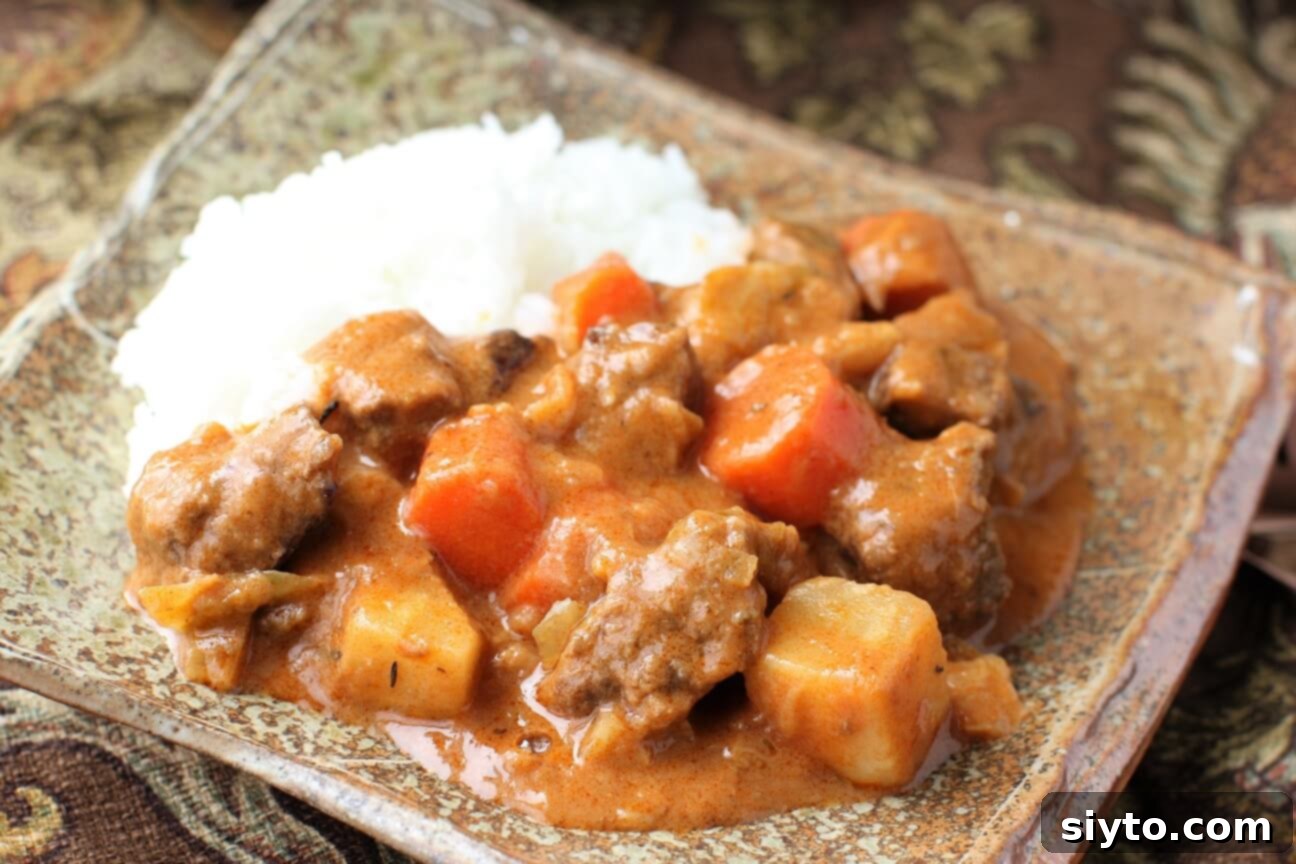
Authentic Senegalese Mafé: A Rich & Creamy Beef and Peanut Butter Stew Recipe
Mafé, often hailed as West Africa’s answer to ultimate comfort food, is a culinary revelation that promises to surprise and delight your palate. Imagine succulent, fall-apart chunks of beef (or chicken or lamb), mingling with hearty, sweet root vegetables, all enveloped in the most unbelievably rich, lusciously smooth tomato and peanut butter gravy. The secret ingredient, peanut butter, doesn’t taste like your average sandwich spread here; instead, it imparts an incredible depth, a complex nuttiness, and a velvety texture that will leave you captivated. This creamy, deeply flavorful dish, originating from the vibrant nation of Senegal, truly elevates the humble beef stew to a gourmet experience while remaining profoundly comforting and satisfying. It’s a testament to the diverse and exciting flavors found within African cuisine. (Skip to recipe.)
This month, our exciting Eat the World recipe challenge takes us on a flavorful journey to Senegal, a nation proudly situated at the westernmost tip of Africa, famously known as the “Gateway to Africa.” For many of us, the vast and varied cuisines of Africa remain an intriguing mystery, and embarking on such a culinary adventure from the comfort of your kitchen offers a wonderful opportunity to learn, explore, and appreciate new cultures and their gastronomical traditions. The Republic of Senegal is a relatively stable and vibrant nation, thriving on its rich history, diverse economy, and a growing tourism and hospitality sector. Its bustling capital city, Dakar, strategically positioned on the Atlantic coast, stands as a popular tourist destination, renowned for its vibrant markets, historic sites, and captivating music scene.
Senegal’s unique geographical position has historically made it a crucial point of entry and exchange for European travelers and traders navigating the African continent. This extensive historical exposure led to a fascinating blend of cultural influences, as the country came under the temporary control of various European powers, including England, France, Portugal, and the Netherlands, over several centuries. Notably, it remained a French colony from the early 1900s until 1960, when it proudly gained its independence. Despite its sovereign status, French remains the official language today, alongside a rich tapestry of indigenous languages like Wolof, spoken by its diverse and dynamic population.
Throughout its history, peanuts, or groundnuts as they are widely known in West Africa, have been Senegal’s main agricultural crop. This staple has played a crucial role in shaping both its economy and its daily culinary practices. While the nation has successfully diversified its agricultural output to include other important products such as sugarcane, cotton, beans, tomatoes, mangoes, and melons, the legacy of the peanut remains deeply ingrained in Senegalese life and food. This agricultural abundance, combined with the lingering influence of French culinary traditions, has fostered a truly unique and diverse Senegalese cuisine. The clever integration of local produce, aromatic spices, and especially peanuts, gives Senegalese dishes a distinctive character that is both familiar in its comforting warmth and exotic in its flavor profile.
The Heart of Senegalese Cuisine: Understanding Mafé’s Rich Heritage
Mafé (also commonly spelled mafe, maffé, maffe, or maafe across various regions) perfectly exemplifies this wonderful culinary amalgamation of local ingredients and historical influences. At its core, Mafé is a rich, long-simmered stew, a concept reminiscent of the French classic pot-au-feu. However, it’s the distinctive Senegalese additions of sweet tomato and, most notably, finely ground peanuts or creamy peanut butter that transform it into something truly special and uniquely West African. The peanut butter, meticulously stirred in near the end of the cooking process, doesn’t just act as a thickener for the gravy; it infuses it with an incredible subtle richness, a profound nutty depth, and a velvety texture that will have you savoring every spoonful and marveling at the complex layers of flavor.
My own research into the world of Mafé revealed a fascinating degree of variation, reflecting the diverse regions of Senegal and the personal touch of each individual cook. While the fundamental elements of the dish remain consistent, Mafé recipes can differ significantly in their details. The choice of protein for the stew’s base is wonderfully flexible, commonly featuring tender beef, succulent chicken, or rich lamb, each contributing its own distinct flavor profile to the overall experience. What consistently ties all Mafé variations together, creating its signature identity, is the luscious gravy, which always boasts a delicate balance of tangy tomato and a generous lacing of ground peanuts or creamy peanut butter. Beyond the meat, the vegetable component also sees regional variations. Some traditional recipes stick to a simple trio of carrots, onions, and cabbage, while others embrace a more abundant assortment of hearty root vegetables. For this particular recipe, I’ve opted for a liberal addition of diverse root vegetables, transforming it into a beautifully rounded, nutritionally complete, and incredibly satisfying one-pot meal that’s perfect for feeding a family or group.
The Unrivaled Comfort and Unique Flavor Profile of Mafé
There’s nothing quite like a generous bowl of Mafé to soothe the soul and provide deep, satisfying comfort. Imagine fork-tender pieces of meat, perfectly complemented by sweet, earthy bites of root vegetables, all sumptuously coated in that glorious, thick, and rich gravy. It’s the kind of meal that deeply satisfies on multiple levels, filling your belly and warming your heart, especially on a chilly evening or when you simply crave the ultimate in comfort food. What makes Mafé truly remarkable is its ability to take a familiar concept like a hearty beef stew and infuse it with an entirely new, exciting, and unexpectedly delicious flavor profile. It’s a culinary journey in every bite, transforming an old favorite into something profoundly more complex, memorable, and utterly addictive.
While the recipe traditionally often calls for beef, don’t hesitate to experiment with other proteins based on your preference or what you have available. If you’re opting for chicken, I highly recommend using diced boneless, skinless chicken thighs. Unlike breast meat, which can unfortunately dry out and shred if stewed for extended periods, chicken thighs retain their moisture and texture beautifully, becoming incredibly tender and flavorful through the slow cooking process. The versatility of Mafé extends equally to its vegetable component. This recipe incorporates a generous four cups of mixed root vegetables, which we absolutely adore, adding robust flavor, texture, and essential nutrients. However, feel free to adjust the quantity or variety based on what you have on hand or what your family enjoys most. Ultimately, while the choice of meat and vegetables are certainly important elements, it’s the unique and expertly integrated addition of peanut butter that truly makes this Senegalese stew shine and sets it apart from any other stew you’ve ever tasted, making it a truly unforgettable dish.
* * * * *
Mafé (Senegalese Beef and Peanut Stew) Recipe
Serves: 6 hearty portions
Prep time: 20 minutes
Cook time: 1½ – 2 hours
Ingredients:
- 2 tablespoons oil (vegetable or peanut oil recommended for authentic flavor)
- 2 lbs (900gms) cubed beef stew meat (such as chuck or round; lamb or boneless, skinless chicken thighs are excellent alternatives)
- 2 medium onions, finely diced
- 4 cloves garlic, minced
- 4 cups (960ml) water (or beef/chicken broth for an even richer base)
- 5 tablespoons tomato paste (~½ of a 156ml/5.5oz can)
- 2 teaspoons fine sea salt (or to taste)
- 1 teaspoon dried thyme
- ¼ teaspoon black pepper
- ¼ teaspoon cayenne pepper (for a subtle warmth; increase for more heat)
- 2 bay leaves
- ½ cup (80gms) smooth peanut butter (creamy, unsweetened is best for balance)
- 4 large carrots, peeled and cut into 1-inch (2.5cm) pieces (about 2 cups)
- 2 – 4 cups (500gms) mixed peeled root vegetables, diced into 1-inch/2.5cm pieces (e.g., turnips, rutabagas, celeriac, parsnip, sweet potato, yam, yucca – choose your favorites!)
- ½ of a medium head of green cabbage (1 lb/450gms), cut into 1-inch/2.5cm chunks (about 6 cups/1.5l)
- Dried red chili flakes for serving (optional, for those who enjoy extra spice)
- Cooked white rice, brown rice, or flatbreads (like roti or naan) for serving
Instructions:
- Brown the Beef: Heat 1 tablespoon of oil in a large Dutch oven or heavy-bottomed pot over medium-high heat. Brown half of the beef cubes on all sides until they develop a deep, rich color. Remove the browned beef and set it aside in a bowl. Add the remaining 1 tablespoon of oil to the pot and brown the second batch of beef. Return all browned beef to the pot. This crucial step of browning the meat develops deep, complex flavors that form the foundation of your stew.
- Sauté Aromatics: Add the diced onions and minced garlic to the pot with the beef. Cook for 3 to 4 minutes, stirring occasionally, until the onions become translucent and fragrant. As you stir, make sure to scrape up any delicious browned bits (known as the “fond”) from the bottom of the pot; these bits are packed with flavor and will dissolve into the gravy, enriching it further.
- Begin Simmering the Base: Pour in the water (or broth), then stir in the tomato paste, salt, dried thyme, black pepper, cayenne pepper, and bay leaves. Bring the entire mixture to a boil, then immediately reduce the heat to a low simmer. Cover the pot tightly and let the beef cook gently for 30 minutes, stirring periodically to ensure even cooking and prevent sticking. This initial simmer helps to tenderize the meat and marry the base flavors.
- Prepare Vegetables: While the meat is undergoing its first simmer, take this opportune time to prepare your vegetables. Peel and dice all your chosen carrots, mixed root vegetables, and green cabbage into uniform 1-inch (2.5cm) pieces. Uniformity in size ensures that all vegetables cook evenly.
- Temper the Peanut Butter: After the initial 30 minutes of simmering, carefully scoop out ½ cup (120ml) of the hot, tomatoey broth from the stew. Transfer this hot broth to a separate, medium-sized bowl. Add the smooth peanut butter to this bowl and stir vigorously, bit by bit, until the peanut butter and broth are smoothly combined and form a thick paste. Don’t worry if the mixture appears a little curdled at first; this is normal and it will blend seamlessly into the stew later. Set this tempered peanut butter mixture aside.
- Add Root Vegetables: Gently add the diced carrots and mixed root vegetables to the pot with the simmering meat. Stir gently to incorporate them into the stew, being careful not to break up the already tender beef. Increase the heat once more to bring the stew back to a boil.
- Add Cabbage: Once boiling, reduce the heat again to a low simmer. Neatly lay the diced cabbage evenly on top of the stew. It might look like a surprisingly large amount of cabbage, but rest assured, it will wilt down significantly as it cooks, almost melting into the stew and becoming barely noticeable in its texture, while contributing a subtle sweetness and earthy flavor. Cover the pot and cook for 10 minutes.
- Continue Simmering with Cabbage: After 10 minutes, uncover the pot and stir the now-softened cabbage into the stew, mixing it thoroughly with the meat and other vegetables. Cover again and continue to simmer for another 20 minutes, stirring occasionally to prevent anything from sticking to the bottom and to ensure all vegetables cook through.
- Finish with Peanut Butter & Thicken: Finally, stir the tempered peanut butter mixture into the stew. Stir well to ensure it is fully incorporated into the gravy. Cook for an additional 10 to 15 minutes, this time uncovered, allowing the Mafé gravy to thicken to your desired consistency. During this stage, the peanut butter will work its magic, transforming the broth into a rich, creamy sauce. Taste and adjust seasoning as needed, adding more salt or a pinch more cayenne if you desire to balance the flavors or increase the spice level.
- Serve: Ladle the hot, flavorful Mafé generously over fluffy white rice, brown rice, or serve it alongside warm flatbreads for dipping into the exquisite, creamy gravy. Offer dried red chili flakes on the side for anyone who prefers an extra layer of spice to customize their meal.
Enjoy your homemade taste of Senegal – a truly comforting and memorable dish!
Check out all the wonderful Senegalese dishes prepared by fellow Eat the World members and share your culinary journey with #eattheworld. Click here to find out how to join and have fun exploring a new country’s cuisine each month in your kitchen with us!
- Amy’s Cooking Adventures: Café Touba (Senegalese Spiced Coffee) #eattheworld
- Culinary Adventures with Camilla: The Kitchen Elves’ Senegalese-Style Gumbo
- Pandemonium Noshery: Poulet Yessa – Senegalese Chicken
- CulturEatz: Senegalese Mango Chocolate Pound Cake
- A Day in the Life on the Farm: Maafe
- Making Miracles: Senegalese Poulet Yassa
- Sneha’s Recipe: Poulet Yassa -Senegalese Style Chicken
- Dinner By Dennis: Fattaya (Deep Fried Senegalese Street Food)
- Kitchen Frau: Mafé (Senegalese Beef & Peanut Stew)
- The Schizo Chef: Senegalese Sweet Potato Shrimp Fritters
Want to receive new Kitchen Frau recipes directly to your email? Sign up here and you’ll get a handy and useful kitchen tip along with each recipe, too. (No spam ever.)
If you like my recipes, follow me on Instagram, Pinterest, Twitter, and Facebook. You’d make my day!
PIN IT HERE to save the recipe for later:
Check out my past ‘Eat the World’ Recipe Challenge posts:
- Argentina: Red Chimichurri Sauce
- Cambodia: Noum Kong (Cambodian Rice Flour Doughnuts)
- Egypt: Fava Beans and Feta
- England: Gluten Free Fish and Chips and Mushy Peas
- Ethiopia: Four Ethiopian Recipes for a Fantastic Feast
- Fiji: Spiced Sweet Potato and Banana Salad
- Finland: Lohikeitto (Creamy Salmon, Potato, and Dill Soup)
- France: Axoa d’Espelette (A Simple Stew from the Basque Country)
- Georgia: Charkhlis Chogi (Beets with Sour Cherry Sauce)
- India: Kerala Upma (Fluffy, Kerala Style Breakfast Upma Recipe)
- Iraq: Tepsi Baytinijan (Eggplant & Meatball Casserole)
- Ireland: Dublin Coddle (A tasty Sausage and Potato Stew)
- Israel: Cucumber, Feta, and Watermelon Salad
- Kenya:Maharagwe with Ugali (Red Beans with Cornmeal Slice)
- Mexico: Cochinita Pibil Tacos (Pit Barbecued Pig to Make in Your Oven)
- New Zealand: Classic Pavlova
- Poland: Polish Honey Cake
- Portugal: Tuna and Sardine Pâtés
- Puerto Rico: Piña Colada Cocktail
- Sweden: Swedish Meatballs with Cream Gravy
- Switzerland (Christmas): Basler Leckerli Cookies
- Thailand: Shrimp Laksa (Khung)
- Trinidad & Tobago: Peanut Butter Prunes
- Ukraine: Buckwheat Kasha with Beef