Authentic Noum Kong: Easy Cambodian Donuts Recipe – Gluten-Free & Addictively Delicious
Prepare your taste buds for an extraordinary culinary journey! Cambodian donuts, known as Noum Kong (or Nom Kong / Khmer Donuts), offer an unparalleled texture and flavor experience that is truly addicting – consider yourself warned! These delectable treats boast a remarkably soft and delightfully chewy interior, beautifully contrasted by a shatteringly crisp exterior. Each bite reveals a subtly sweet, nutty essence that will leave you craving more. (Skip to recipe.)
Oh, boy, exciting and delicious things have been bubbling in my kitchen lately, all in the name of authentic Cambodian donuts! When you’re developing new recipes, especially ones as utterly drool-worthy as these sweet fried treats with their unique stretchy, chewy centers and gloriously crisp exteriors, taste-testing becomes less of a chore and more of an absolute perk of the job.
This month, our culinary adventures for the Eat the World recipe challenge have taken us to the vibrant and fascinating country of Cambodia. This destination has always held a special place on my travel bucket list, and the thought of exploring its exotic sights, captivating sounds, and incredible flavors fills me with anticipation. Among Cambodia’s many culinary delights, Noum Kong (also known as Nom Kong or Khmer Donuts) stands out as a highly popular Cambodian street food. While I dream of the day I can wander through bustling Cambodian markets, indulging in these fresh, sweet fried treats straight from a vendor’s cart, I’m delighted to report that replicating them in my own kitchen is surprisingly straightforward. You don’t need a plane ticket to experience these authentic flavors!
Discover the Simplicity: How Easy Are These Cambodian Donuts to Make?
You’ll be amazed to learn that the dough for these incredibly flavorful Cambodian donuts requires just four simple ingredients! This minimal ingredient list makes them an accessible and rewarding project for any home baker, whether you’re a seasoned chef or a beginner looking for something new and exciting.
Key Ingredient Spotlight: Glutinous Rice Flour (The Secret to Texture)
The star ingredient in these Cambodian donuts is glutinous rice flour. Despite its name, it contains absolutely no gluten – the term “glutinous” refers to the wonderfully sticky, chewy texture it imparts when cooked, much like glue. This versatile flour is also commonly known as sweet rice flour or mochiko rice flour. Its light, fine texture is what gives Noum Kong its characteristic soft and chewy consistency.
You can often find this gluten-free flour in health food stores or natural food stores, but your best bet is usually in Asian grocery stores or the international aisle of larger supermarkets. If possible, seek out the Asian variety, which is typically ground much more finely than regular sweet rice flour or mochiko flour found in Western markets. This finer grind makes a noticeable difference in the smoothness of your dough and the final texture of your donuts. Plus, it’s often quite inexpensive! If you manage to find the common 400-gram bags with green writing (a popular brand in many Asian markets), you can simply use one entire bag for this recipe, making the process even easier. If you can only access regular sweet rice flour or mochiko flour, it’s advisable to weigh the amount for greater accuracy, or be prepared to incrementally adjust the amount of coconut milk until you achieve a beautifully smooth and pliable dough.
Regarding the coconut milk, it’s crucial to use the full-fat, creamy kind typically found in tetrapaks or cans, not the thinner coconut milk beverage designed for drinking. The richness of canned coconut milk is essential for the dough’s moisture and flavor.
Crafting the Perfect Dough for Your Khmer Donuts
Once you’ve gathered your simple ingredients, the dough comes together quickly. Combine the glutinous rice flour, sugar, and salt in a bowl. Gradually add the coconut milk, a little at a time, mixing after each addition. It’s best to start with 1½ cups (360ml) and hold back the remaining amount. Once the mixture starts to come together, use your hands to really work the dough until it forms a cohesive ball that no longer sticks to the sides of the bowl. If the dough still feels a bit dry or crumbly, incorporate the remaining coconut milk, one tablespoon at a time, kneading after each addition to ensure proper absorption and to gauge the consistency.
A crucial tip for perfectly textured Cambodian donuts: avoid making the dough too soft. Overly moist dough can lead to steam pockets building up during frying, causing small bits of dough to ‘pop’ out of the donuts. While these extrusions don’t affect the taste, they do result in more irregular-looking donuts. The ideal dough consistency should feel similar to soft, pliable playdough – smooth, elastic, and easy to work with. Once you’ve achieved this, knead the dough for about one minute, then shape it into a ball, cover it tightly with plastic wrap, and allow it to rest for 15 minutes. This resting period allows the flour to fully hydrate, resulting in a more relaxed and easier-to-handle dough.
Shaping Your Noum Kong: Where the Fun Begins!
Now, this is where the real fun of making Cambodian donuts truly begins! Once your dough has rested, pinch off golf-ball sized pieces. Roll each piece between your palms and then on a clean surface into short ropes, approximately 6 inches (15 cm) long. Don’t worry about perfection; the charm of homemade Noum Kong lies in their slightly irregular, unique shapes. Take one of these ropes and gently connect the ends to form a circle, pressing them firmly together to seal. This classic ring shape is traditional for these gluten-free donuts. Repeat this process until you have a tray full of beautifully shaped donuts, ready for their hot oil bath.
Deep Frying: Achieving That Perfect Crispiness
Next, it’s time to gently lower your carefully shaped Cambodian donuts into hot oil. If the idea of deep frying feels a little intimidating, don’t fret! It’s much simpler than you might imagine, especially if you start with a minimal amount of oil. The key is never to let your oil get excessively hot and, most importantly, never leave simmering oil unattended. With those safety precautions in mind, the rest is quite easy!
I find a wok to be an excellent tool for frying. Its tapered bottom design means you require less oil to achieve adequate depth, yet the wider surface area at the top allows you to fry more donuts simultaneously. For frying, choose a heat-tolerant oil like peanut oil, or a combination of extra light olive oil and sunflower oil. Aim for about 1½ to 2 inches of oil depth in your pan. To test if your oil is at the right low deep-frying temperature (ideally 325-350°F / 170-180°C), drop a pea-sized ball of dough into it. If small bubbles immediately form around the dough ball and it gently sizzles, your oil is ready. Once cooled, you can also strain your used oil through a coffee filter set in a sieve and reuse it several times, until it begins to darken too much.
Gently drop each donut into the hot oil. Within the first few seconds of adding each donut, use a silicone spatula to slide under it and loosen it from the pan’s bottom, preventing sticking. Then, use chopsticks or tongs to gently move the donuts around in the oil. Fry them in batches, ensuring they float comfortably in a single layer without overcrowding the pan. These Noum Kong require a medium-low temperature and take a bit of time to cook through and become golden. Turn them several times with your chopsticks or tongs. They will take approximately 10 to 12 minutes to achieve a beautiful, light golden color. Once done, remove them from the oil and place them on a cookie sheet lined with paper towel or newspaper (avoid colored pages to prevent ink transfer) to drain any excess oil.
The Traditional Sesame Caramel Glaze
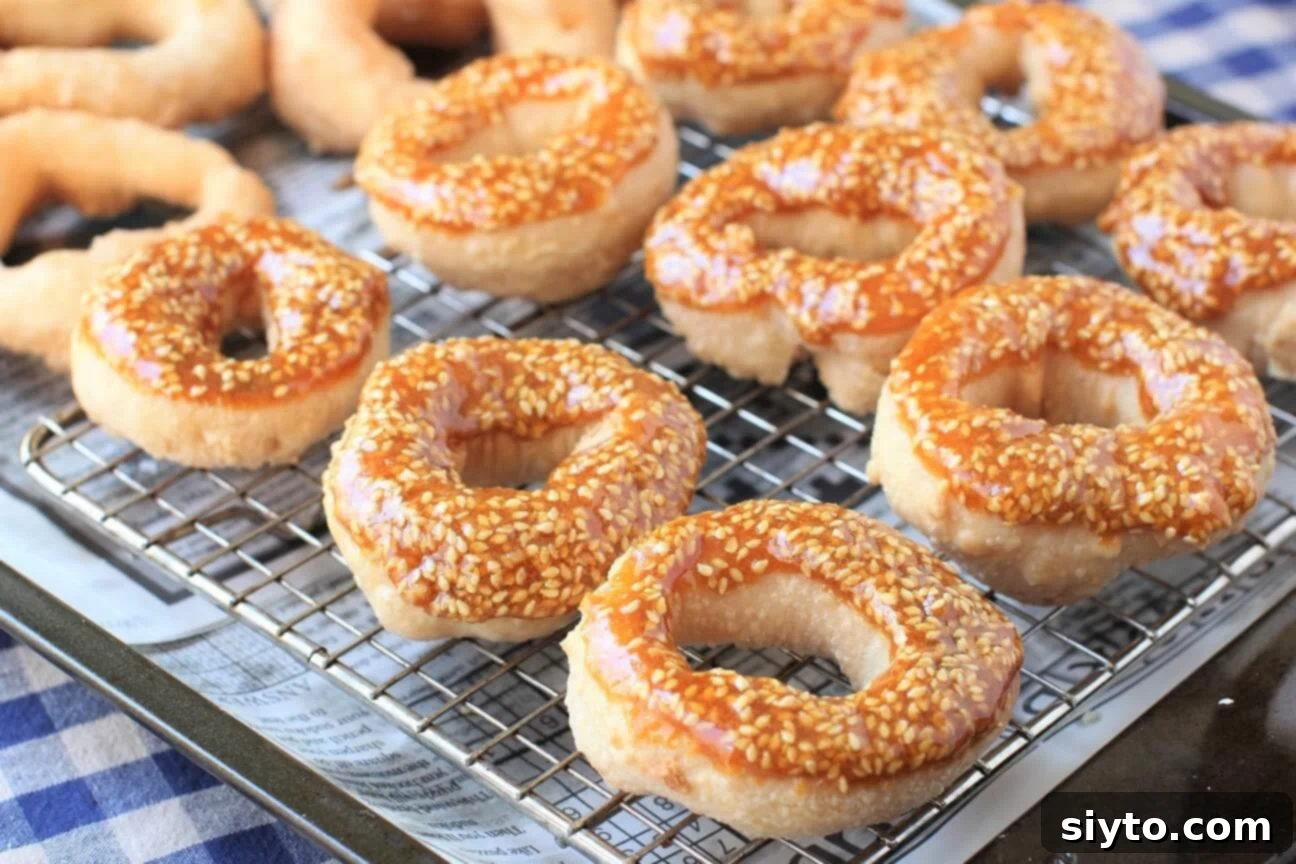
After frying, the traditional way to finish these Cambodian donuts is with a stunning caramelized sugar and sesame seed glaze. This step adds an incredible layer of crunch and a nutty-sweet flavor that perfectly complements the soft donut. In a skillet, combine sugar and water. Heat this mixture over high heat without stirring, only swirling the pan occasionally. The syrup will bubble steadily as the water evaporates. Keep a close eye on it, as sugar can burn quickly. After about 5 minutes, you’ll notice the syrup starting to change color. Reduce the heat to medium and continue cooking, gently swirling, until it reaches a luscious, deep caramel color – this usually takes just another minute or two. Immediately remove the skillet from the heat and stir in the toasted sesame seeds.
This caramelized sugar glaze hardens almost instantly, creating a delightful crunchy coating, much like a candy apple. Using your fingers or a pair of tongs, carefully hold each donut horizontally and lightly dip only the top side into the hot glaze. Then, invert it onto a wire rack to allow the glaze to set and harden. Please exercise extreme caution during this step, as caramelized sugar is incredibly hot and can cause severe burns if it touches your skin. If the glaze begins to harden too much before you’ve coated all your donuts, gently reheat it on the stovetop over low heat until it becomes liquid enough to continue dipping.
Just look at that crackly, caramelly, sesame glaze… oh yeah, it’s absolutely irresistible!
A Delightful Variation: Powdered Sugar Cambodian Donuts
During my extensive “research” (read: joyful taste-testing sessions), I discovered a favorite variation that offers a simpler yet equally sublime experience. For this version, I added a couple more tablespoons of sugar to the donut dough itself. By doing so, you can completely skip the glazing stage and simply dust the finished, still-warm donuts with a generous coating of powdered sugar. The result? Pure deliciousness! These powdered sugar donuts are soft, sweet, and melt-in-your-mouth tender, offering a different but equally compelling flavor profile.
A Note on Dough Consistency: The “Bulges” Explained
You might notice small bulges on the bottom of some of your fried donuts. Don’t worry, this is nothing to be concerned about in terms of taste or safety. These minor imperfections are simply a result of dough that was perhaps a little too soft. When the dough is overly moist, steam can build up internally during frying. This steam then expands, causing small bits of dough to ‘pop’ out. While it creates an irregular appearance, it doesn’t diminish the deliciousness of your homemade Cambodian donuts. This is why paying attention to the dough’s “playdough” consistency is important!
So, whether you decide to prepare the traditional sesame candy-coated Noum Kong or opt for the simpler, yet equally delightful, powdered sugar version, you can have these most amazing, gluten-free donuts ready to enjoy in a remarkably short time. Consider this a fantastic practice run for when you eventually get the chance to visit Cambodia and savor the real thing, hot off the bustling street vendors’ carts. Either way, you’re in for a treat!
* * * * *
Kitchen Frau Notes: If you’re using regular sweet rice flour (which is often heavier and less finely milled than the super-fine Asian variety), you will likely need slightly less than 3½ cups by volume. Weighing your flour will provide much greater accuracy. If you measure by cups with regular sweet rice flour, you may need to add a bit more coconut milk, incrementally, until your dough reaches the desired playdough-like consistency.
As mentioned earlier, the coconut milk to use for this recipe is the full-fat, creamy kind typically sold in tetrapaks or cans, not the thinner coconut milk drinking beverage. The richness of canned coconut milk is crucial for the dough’s texture and flavor.
Noum Kong – Traditional Cambodian Donuts Recipe
Ingredients:
- One 400 gram / 14 oz bag (approx. 3½ cups) super-fine Asian glutinous rice flour, or use 400 grams / 14 oz of sweet rice / mochiko flour (weigh for best accuracy if not using super-fine Asian variety)
- 2 tablespoons coconut palm sugar or granulated sugar (use 4 tablespoons sugar if you plan to dust them with powdered sugar instead of glazing them)
- ½ teaspoon salt
- 1½ – 1⅔ cups (360-400ml) full-fat coconut milk (from a can or tetrapak, not a beverage)
- Oil for deep frying – enough to be about 1½ to 2 inches deep in a wide pan (a wok works exceptionally well); use a heat-tolerant oil like peanut oil or a blend of extra light olive oil and sunflower oil.
For the Traditional Sesame Glaze (Optional):
- 1 cup (200 grams) granulated sugar or palm sugar
- ¼ cup (60ml) water
- ¼ cup (4 tablespoons) toasted sesame seeds
- *Alternatively, you can omit the glaze and instead add 2 additional tablespoons of coconut palm sugar to the donut dough, then dust the finished donuts generously with powdered sugar.
Instructions:
- Prepare the Dough: In a large mixing bowl, stir together the glutinous/sweet rice flour, the measured sugar (2 or 4 tablespoons, depending on your chosen finish), and salt until well combined. Gradually add 1½ cups (360ml) of the coconut milk, a little at a time, stirring after each addition. Once the mixture starts to come together, use your hands to mix and knead the dough until it forms a cohesive ball and no longer sticks to the sides of the bowl.
- Adjust Consistency: If the dough feels a bit dry or crumbly, add the remaining coconut milk, one tablespoon at a time, mixing in each tablespoon thoroughly before adding more. The dough should achieve a soft, pliable consistency, similar to playdough. Be careful not to make the dough too soft, as excess moisture can create steam pockets during frying that cause bulges. Knead the dough for about 1 minute, then shape it into a ball, cover it tightly with plastic wrap, and let it rest for 15 minutes.
- Heat the Oil: While the dough rests, prepare your oil for frying. Pour the oil into a wide, heavy-bottomed pan or wok, ensuring it’s 1½ to 2 inches deep. Heat the oil over medium heat to a low deep-frying temperature, ideally between 325 – 350°F (170-180°C). If you don’t have a thermometer, test the oil by dropping a pea-sized ball of dough into it. When small bubbles gently rise from around the dough ball, the oil is ready.
- Shape the Donuts: Pinch off golf-ball sized bits of the rested dough. Roll each piece into a rope approximately 6 inches (15cm) long. Form the rope into a circle and firmly press the ends together to seal, creating a donut shape.
- Fry the Donuts: Gently drop the shaped donuts into the hot oil, being careful not to overcrowd the pan. Fry them in batches, ensuring they float comfortably in a single layer. Within the first few seconds of dropping each donut, use a silicone spatula to slide underneath and loosen it from the bottom of the pan to prevent sticking. Then, use a pair of chopsticks or tongs to gently move the donuts around in the oil. Fry at a medium-low temperature, turning them several times, for about 10 to 12 minutes, until they turn a light golden color.
- Drain Excess Oil: Once the donuts are cooked to a light golden hue, remove them from the oil using chopsticks or tongs and place them onto a cookie sheet lined with paper towels or newspaper (avoid using colored pages) to drain any excess oil. Continue shaping and frying the remaining donuts in batches until all are cooked.
- Prepare the Glaze (Traditional Method): If glazing, pour 1 cup of sugar into an even layer at the bottom of a skillet. Pour the ¼ cup of water over the sugar. Heat the sugar and water over high heat without stirring, but gently swirling the pan occasionally to ensure even heating. The mixture should bubble steadily as the water cooks off. Watch carefully. After about 5 minutes, the sugar syrup will begin to change color slightly. Reduce the heat to medium and continue cooking the syrup, gently swirling occasionally, until it reaches a luscious caramel color, which typically takes another 1-2 minutes. Immediately remove the skillet from the heat and stir in the toasted sesame seeds.
- Glaze the Donuts: Carefully hold each fried donut horizontally with your fingers or a pair of tongs. Lightly dip just the top side of each donut into the hot caramel glaze. Immediately invert the dipped donut onto a wire rack to allow the glaze to set and harden. Be extremely cautious, as the caramelized sugar is intensely hot and can cause severe burns. If the glaze begins to harden too much before you’ve finished, gently reheat the skillet on the stovetop over very low heat until it becomes liquid enough to continue dipping.
- Powdered Sugar Option: If you chose the powdered sugar variation (by adding 4 tablespoons of sugar to the dough initially), simply allow the fried donuts to cool slightly, then place them in a bowl with a generous amount of powdered sugar and toss gently to coat, or dust them heavily with a sieve.
- Serve and Enjoy: These Cambodian donuts are truly best when eaten on the day they are made, fresh and warm. I dare you to eat just one!
Makes approximately 20 to 24 delicious donuts.
Guten Appetit!
Discover more wonderful Cambodian dishes prepared by fellow Eat the World members and share your culinary journey using #eattheworld. Click here to find out how to join and embark on a delicious adventure, exploring a new country in your kitchen each month with us!
CulturEatz: Cambodian Green Mango Shrimp Salad
Culinary Adventures with Camilla: Somlar Machu Ktiss (Cambodian Hot and Sour Coconut Soup)
Palatable Pastime: Grilled Cambodian Beef Sticks
Pandemonium Noshery: Khmer Lok Lak
Amy’s Cooking Adventures: Loc Lac (Cambodian Beef with Lime)
Home Sweet Homestead: Cambodian Spring Rolls
A Day in the Life on the Farm: Aioan Chua Noeung Phset Kretni
Loreto and Nicoletta: Cambodian Tapioca Banana Pudding
Margaret: Traditional Cambodian Rice Flour Donuts
House of Nash Eats: Cambodian Chicken Red Curry [Somlar Kari Saek Mouan]
Want to receive new Kitchen Frau recipes directly to your email? Sign up here and you’ll get a handy and useful kitchen tip along with each recipe, too. (No spam ever.)
If you like my recipes, follow me on Instagram, Pinterest, Twitter, and Facebook. You’d make my day!
Don’t forget to PIN IT to save the recipe:
Check out my past ‘Eat the World’ Recipe Challenge posts:
- A Taste of Ireland: Dublin Coddle (A tasty Sausage and Potato Stew)
- A Taste of Thailand: Shrimp Laksa (Khung)
- A Taste of Kenya:Maharagwe with Ugali (Red Beans with Cornmeal Slice)
- A Taste of Sweden: Swedish Meatballs with Cream Gravy
- A Taste of New Zealand: Classic Pavlova
- A Taste of France: Axoa d’Espelette (A Simple Stew from the Basque Country)
- A Taste of Argentina: Red Chimichurri Sauce
- A Taste of India: Kerala Upma (Fluffy, Kerala Style Breakfast Upma Recipe)
- A Taste of Poland: Polish Honey Cake
- A Taste of Ethiopia: Four Ethiopian Recipes for a Fantastic Feast
- A Taste of England: Gluten Free Fish and Chips and Mushy Peas
- A Taste of Georgia: Charkhlis Chogi (Beets with Sour Cherry Sauce)
- A Taste of Mexico: Cochinita Pibil Tacos (Pit Barbecued Pig to Make in Your Oven)