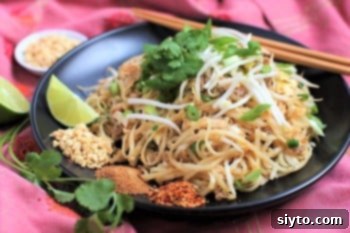
Authentic Pad Thai Recipe: Master Thailand’s Beloved Stir-Fried Noodles at Home
Authentic Pad Thai is far more than just a dish; it’s a vibrant symphony of flavors and textures, a culinary journey through the bustling streets of Thailand. Once you gather the essential ingredients and grasp the surprisingly simple technique, you’ll be able to recreate this iconic street food effortlessly, whether for a quick weeknight meal or to impress your dinner guests with an exotic feast. (Skip to recipe.)
If you’re one of my regular followers on Instagram, you’ve probably caught glimpses of several eagerly snapped plates of Pad Thai noodles, often accompanied by my enthusiastic caption, “I can’t wait to dig in!” Indeed, I’ve been on a Thai cooking spree, thoroughly enjoying the deliciously umami results. My apologies for the delay in sharing this cherished recipe, as I’ve been too busy slurping up every last strand. But the wait is finally over – here it is, the authentic Pad Thai recipe you’ve been craving!
A Culinary Adventure Inspired by Southeast Asia
Our youngest son recently returned from an incredible three-month trek across Southeast Asia, and I’ve been living vicariously through his captivating tales of adventure. He, along with his twin cousins, explored the diverse landscapes and vibrant cultures of Thailand, Laos, Cambodia, and Vietnam. Their journey was packed with unforgettable experiences, from the thrilling depths of scuba diving in Thailand, where they were lucky enough to have a close encounter with an elusive whale shark, to challenging hikes and mysterious caving expeditions. They even experienced a profound cultural immersion during a homestay with a local family in a humble, dirt-floored hut. Adding to their epic adventure, they purchased used motorbikes to navigate the winding roads, which, as expected, came with daily repair adventures and plenty of character-building moments. And, of course, there was a fair bit of youthful revelry – though those stories were wisely kept from their mothers!
A little bit of rain and a whole lotta sunshine, capturing the essence of Thailand.
Bringing Thai Flavors Home: The Origin of This Pad Thai Recipe
During their incredible journey, the boys even took a hands-on cooking class in Thailand – a detail I found particularly impressive! Andreas brought back a cookbook from his culinary school experience, along with a newfound enthusiasm for recreating some of those incredible Thai dishes right here at home. Inspired by his adventures and craving the vibrant tastes of Thailand, we embarked on a culinary exploration together.
Together, we’ve whipped up a couple of different curries, including a wickedly hot green curry that truly tested our spice tolerance, and, of course, this phenomenal authentic Pad Thai. The term Pad or Phad in Thai simply means ‘to stir-fry,’ so at its heart, this dish is a delicious Thai stir-fry. Andreas fondly recalled eating Pad Thai countless times in Thailand, watching local cooks skillfully prepare single servings of this deliciously savory fried noodle dish in bustling streetside stalls, each plate a masterpiece of fresh ingredients and rapid-fire technique.
The Essence of Thai Street Food: Quick, Flavorful, and Customizable
The magic of authentic Pad Thai often unfolds in a single, searingly hot wok. Street vendors would expertly push noodles and proteins aside, frying each component individually before tossing everything together in a harmonious blend of flavors and textures. This method ensures every element is perfectly cooked and infused with that distinctive smoky “wok hei” aroma.
Andreas explained that traditional Pad Thai in Thailand is typically served with a fresh wedge or two of lime, alongside small mounds of crushed peanuts, white sugar, and dried crushed chilies. A tiny spoon is provided, allowing diners to customize their noodles with as much of each garnish as they desire, creating a perfectly balanced flavor profile to their personal taste. My few minor alterations to this classic recipe include swapping white sugar for coconut palm sugar, slightly reducing the oil content for a lighter finish, and doubling the amount of bean sprouts – simply because I can’t get enough of their fresh crunch!
Essential Ingredients and Tips for the Best Pad Thai
While the ingredients list for authentic Pad Thai might seem extensive at first glance, please don’t let it deter you. This is truly a dish worth mastering, and the effort pays off immensely. The beauty of it is that once you’ve made it the first time and become familiar with the components and process, subsequent attempts will feel remarkably easy and intuitive!
So, get ready to unleash your inner chef, bring out those chopsticks, and prepare to embark on a delightful tableside trip to the heart of Asia with every savory bite!
(*Travel photos courtesy of Clay Kiiskila, Simon Kiiskila, and Andreas Johnson)
* * * * *
Kitchen Frau Notes for Perfect Pad Thai:
The authentic flavor base for this incredible dish truly relies on shrimp. If you can source small dried whole shrimp (preferably with heads and shells still on) from an Asian market, you will achieve the most traditional and deeply savory taste. These gems are worth seeking out; buy a few bags when you find them and store them in your freezer for future Pad Thai cravings! However, if dried shrimp prove elusive, don’t despair! You can still make a fantastic Pad Thai by simply using double the weight of whole shelled raw shrimp, coarsely chopped. The dish will still be absolutely delicious.
This recipe is wonderfully adaptable, allowing you to tailor it to your preferences or what you have on hand. Feel free to use beef instead of pork or chicken for a different flavor profile. For an exquisite Shrimp Pad Thai, you can even omit the pork or chicken entirely and use additional whole fresh shrimp. If you have leftover cooked chicken or pork strips, they make a quick and convenient addition too.
Tofu is a traditional component, but you can certainly omit it if it’s not to your liking. Similarly, if you’re not a fan of bean sprouts, shredded napa cabbage makes an excellent, crunchy alternative. The pickled daikon radish adds a unique tangy crunch; if you can’t find it, I’ve provided a simple quick-pickle method below. Alternatively, you can even omit the pickled radish entirely and compensate with an additional teaspoon of rice vinegar and an extra splash of soy sauce to maintain that essential zing.
Authentic Pad Thai (Phat Thai Sai Kai – Fried Noodle Thai Style)
This recipe yields 2 generous servings and can be easily doubled to serve 4.
Ingredients:
- 4 tablespoons oil, divided
- 1 tablespoon finely chopped garlic
- 2 tablespoons finely chopped shallot or purple onion
- ½ of a 400 gram package wide flat rice noodles (approx. 200gm / 7oz)
- 1 cup (240ml) chicken stock + 1 cup (240ml) water, or 2 cups (480ml) plain water
- 1 tablespoon black soy sauce (or gluten-free soy sauce for dietary needs)
- 100 gm (3.5oz) minced pork or chicken, cut into long slivers (or use ground pork, chicken, beef, or whole fresh shrimp)
- 100 grams (3.5oz) small dried shrimp or 200 gm (7oz.) fresh raw shrimp, coarsely chopped
- 1 tablespoon pickled sweet & salted Chinese radish (*see quick method below)
- ¼ cup firm tofu, cut into small cubes
- 2 large eggs
- 2 tablespoons sugar (coconut sugar recommended for depth of flavor)
- 2 tablespoons fish sauce (essential for authentic umami)
- 2 tablespoons rice vinegar or tamarind paste (for tanginess)
- 2 cups fresh bean sprouts
- 100 gm sliced green onions/scallions (about 1 cup sliced / 6 to 8 onions)
- Fresh cilantro leaves, for garnish
- 2 tablespoons chopped roasted peanuts, for garnish
- Lime wedges, for serving
- Asian ground chili pepper, for serving (optional, adjust to taste)
- Additional sugar, for serving (optional, adjust to taste)
*Quick Pickled Radish Method (if Chinese radish is unavailable):
If you can’t find pickled sweet & salted Chinese radish, don’t worry! Simply grate about 2 tablespoons of fresh daikon radish, turnip, or even carrot into a small bowl. Add ½ teaspoon salt, 1 teaspoon sugar, and 1 tablespoon vinegar. Let this mixture macerate (soften and absorb flavors) for about 15 minutes, stirring occasionally. Before using in the recipe, thoroughly drain and squeeze out any excess liquid. This quick-pickled vegetable will provide a similar tangy crunch. For an even simpler alternative, refer to the “Kitchen Frau Notes” above the recipe section.
Instructions:
- Prepare the Noodles: Pour 2 tablespoons of the oil into a wok or a large, heavy-bottomed saucepan over medium-high heat. Add the finely chopped garlic and shallots. Cook, stirring constantly, until the garlic just begins to turn golden brown and fragrant – be careful not to burn it.
- Add the wide rice noodles, chicken stock and water (or just water) to the wok. Cook, turning the noodles constantly with a spatula to prevent them from sticking together, until they are just soft and pliable, which should take approximately 2 minutes. Stir in the black soy sauce. Once cooked, carefully remove the noodles and any remaining broth from the wok into a large bowl or pot, and cover it to keep them warm.
- Cook the Proteins: Add another 1 tablespoon of the oil to the same pan you cooked the noodles in. Add the minced pork or chicken and cook, breaking it up with your spatula, until the meat is no longer pink and is lightly browned.
- Next, add the fresh or dried shrimp. Continue to cook for another couple of minutes until the raw shrimp are opaque and fully cooked, or the dried shrimp are thoroughly heated through and fragrant.
- Stir in the pickled radish and the cubed firm tofu. Fry for another two minutes, allowing the flavors to meld and the tofu to lightly crisp. Scrape this delicious mixture of meat and tofu from the pan and add it on top of the warm noodles in the bowl. Cover again to keep everything warm.
- Finish the Stir-Fry: Add the remaining tablespoon of oil to the now-empty pan. Once heated, crack the eggs directly into the pan and quickly scramble them with your spatula until they are just set but still moist.
- Return the cooked noodles and meat mixture from the bowl back into the pan with the scrambled eggs. Sprinkle in the sugar, fish sauce, and rice vinegar or tamarind paste. Add half of the fresh bean sprouts and most of the sliced green onions (reserving a few for garnish). Gently toss and mix all the ingredients together until everything is well combined and heated through.
- Serve and Garnish: Carefully spoon the finished Pad Thai onto two individual plates, ensuring each plate receives an equal share of the delicious meat and vegetables that tend to settle at the bottom of the pot.
- Top each serving with the remaining fresh bean sprouts and a scattering of fresh cilantro leaves. For the authentic Thai street food experience, arrange the garnishes at the side of each plate: place a fresh lime wedge, and next to it, create three separate small heaps in a row – one with 1 tablespoon of chopped roasted peanuts, another with a small heap of coarsely ground chili pepper, and a third with a small heap of additional sugar.
- Serve immediately with chopsticks and a small spoon, allowing each person to customize their Pad Thai with as much of the condiments as they desire, adjusting the balance of sweet, sour, salty, and spicy to their perfect taste.
Serves 2.
Guten Appetit!
If you love discovering delicious recipes, be sure to follow me on Instagram, Pinterest, Twitter, and Facebook. Your support makes my day!
You might also like these flavorful recipes:
Mediterranean Fried Rice
Butter Fish – Like Butter Chicken-of-the-Sea
Wild Mushroom Risotto
Deluxe Crustless Pizza-Ghetti Pie